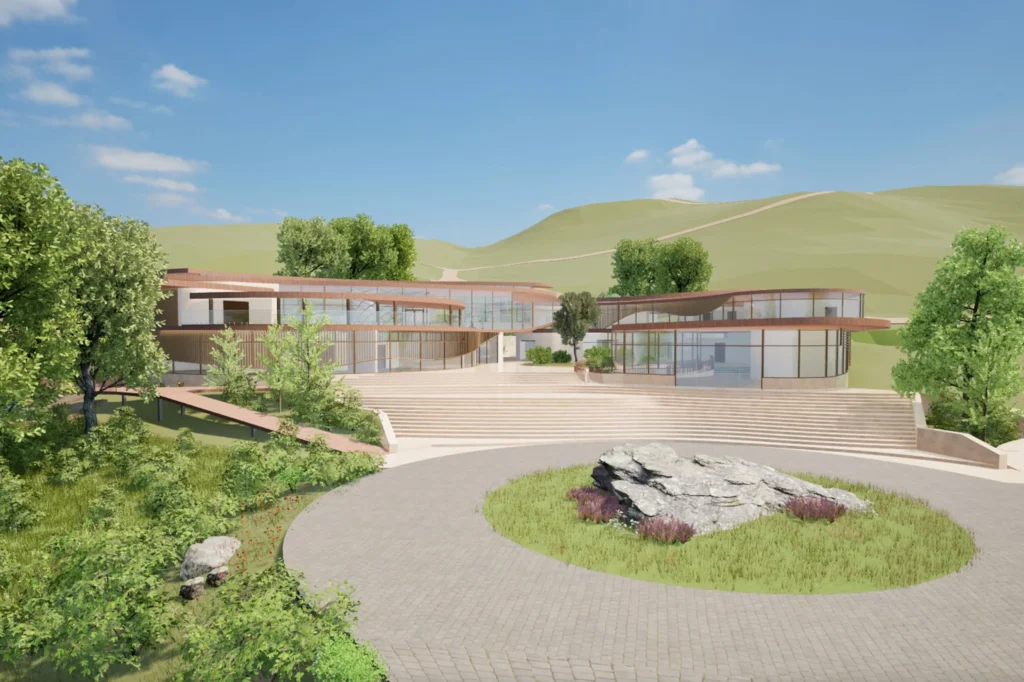
Shape of the Wind

shape of the wind

Project Description

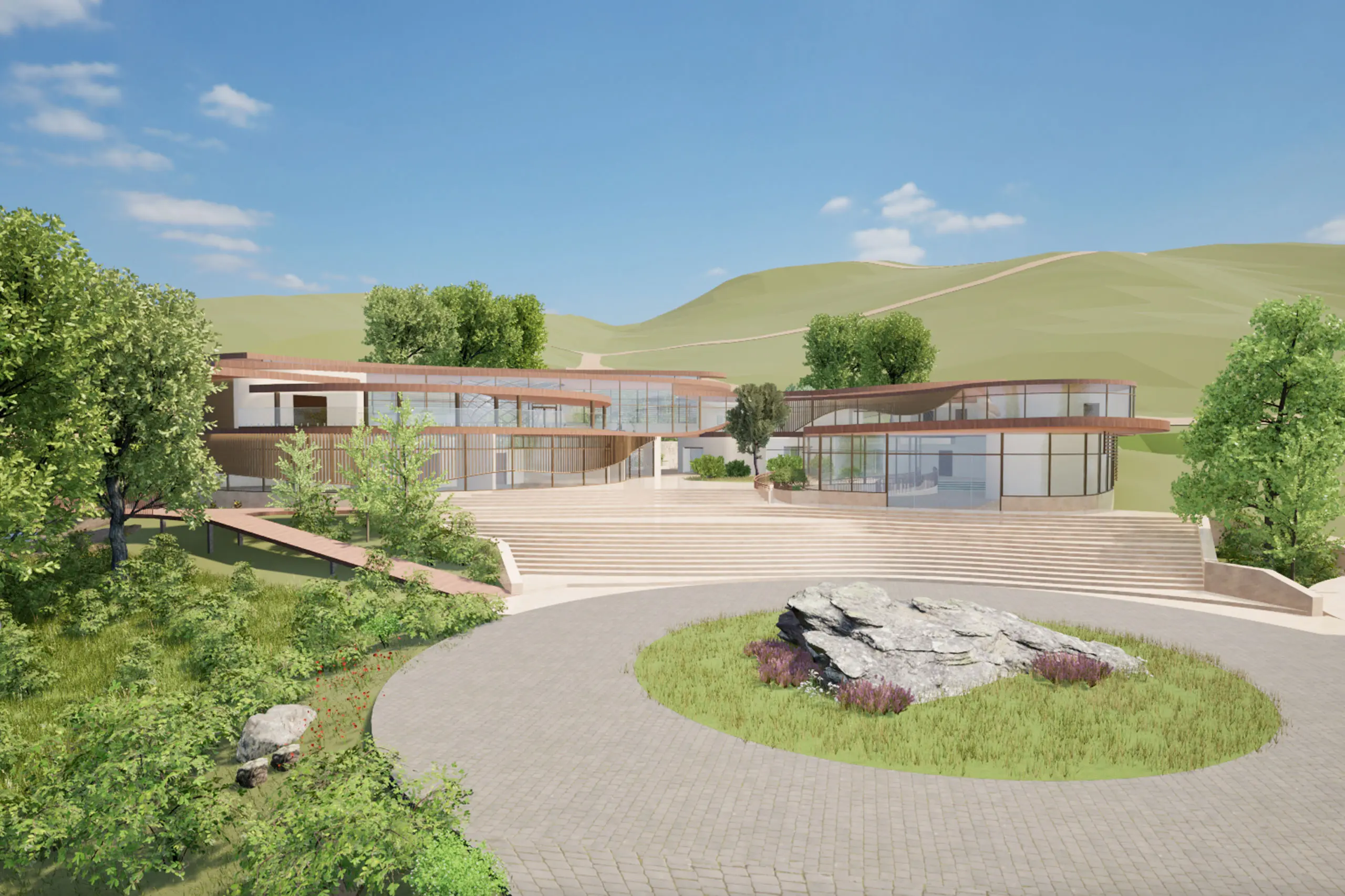
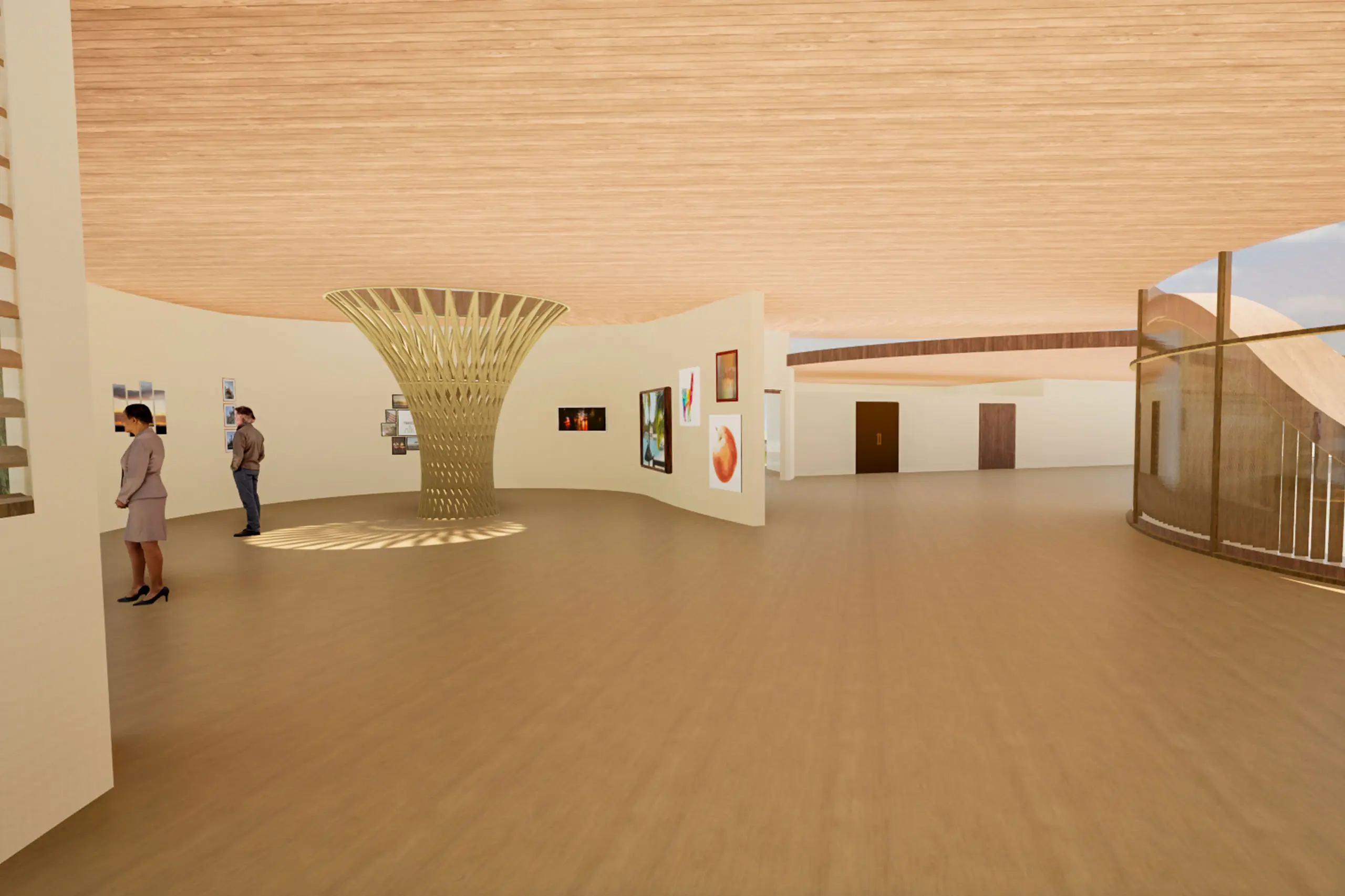
This project aims to design architecture for a non-profit organization focused on educating and practicing naturopathic therapies. It emphasizes respect for the indigenous people who inhabited this land and prioritizes sustainable architectural design. 

Software: Revit, Rhino.Inside, Grasshopper, Twinmotion, Illustrator, Photoshop

Inspiration

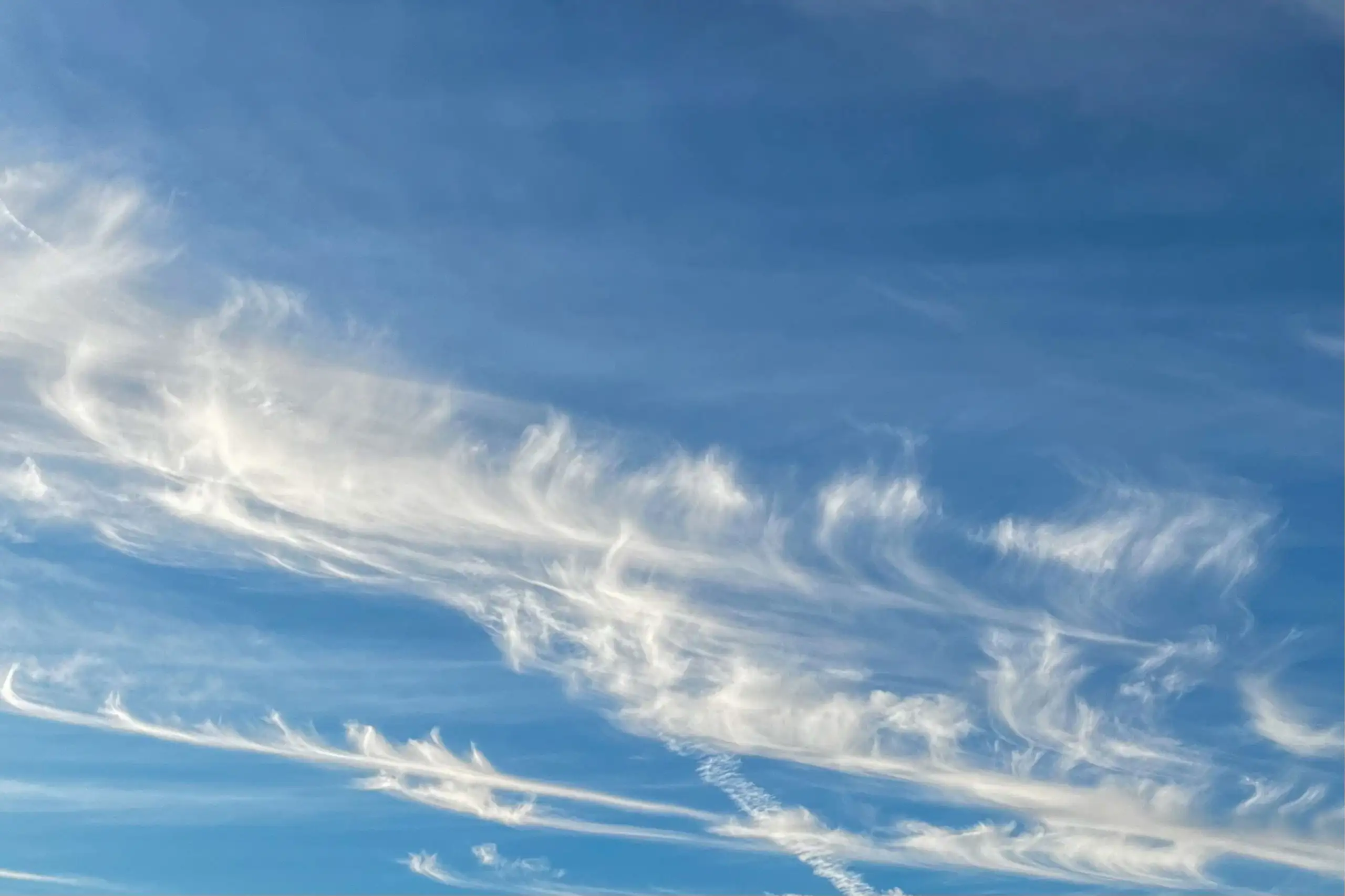
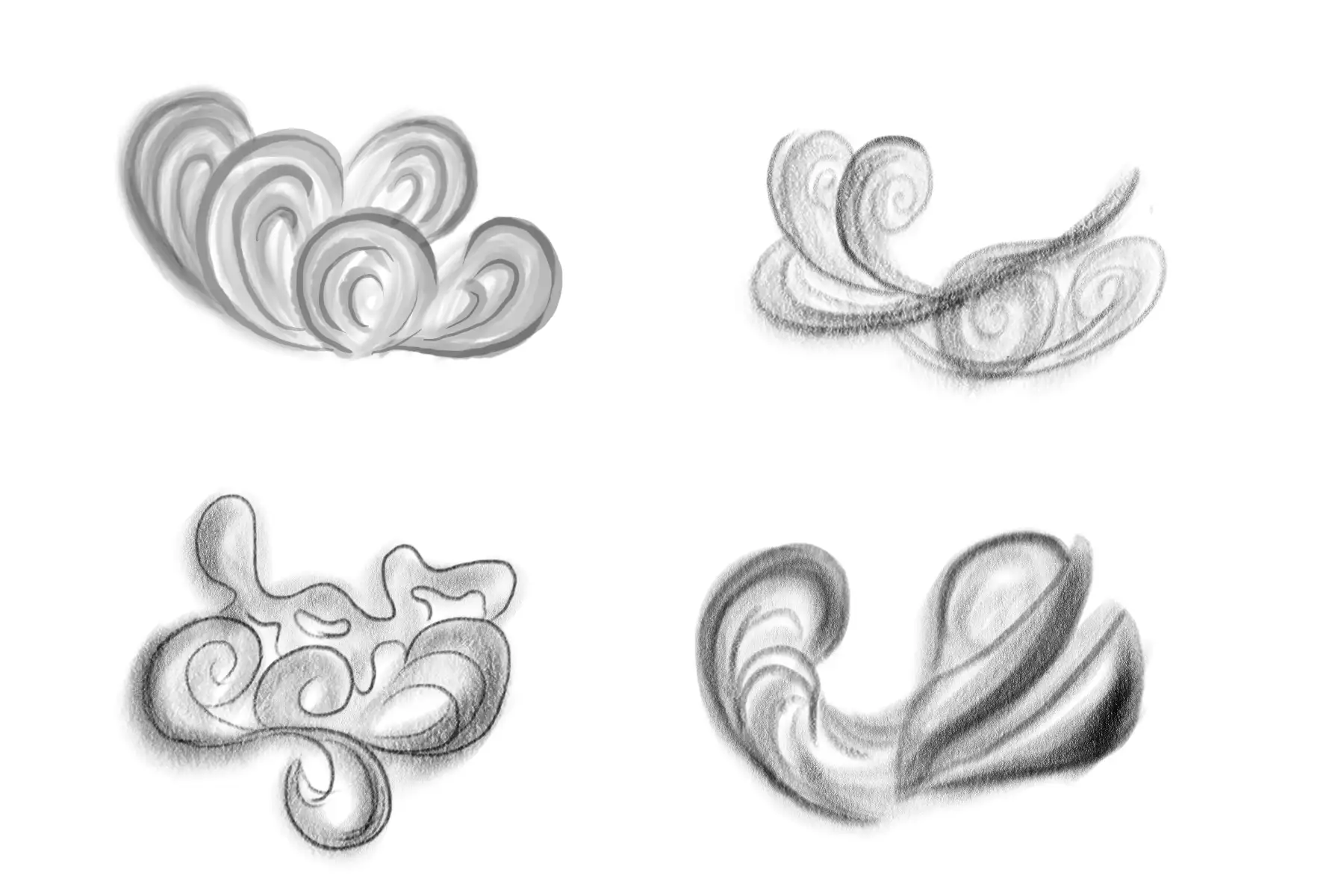
I consistently drew inspiration from the wind for this project. I was fascinated by how the invisible flow of air shapes objects like the sea, desert, or sky. Pursuing these beautiful forms, I aimed to capture and express them within the realm of architecture, tracing the memory of the wind – the gentle breeze that I felt at the Site. 

Concept

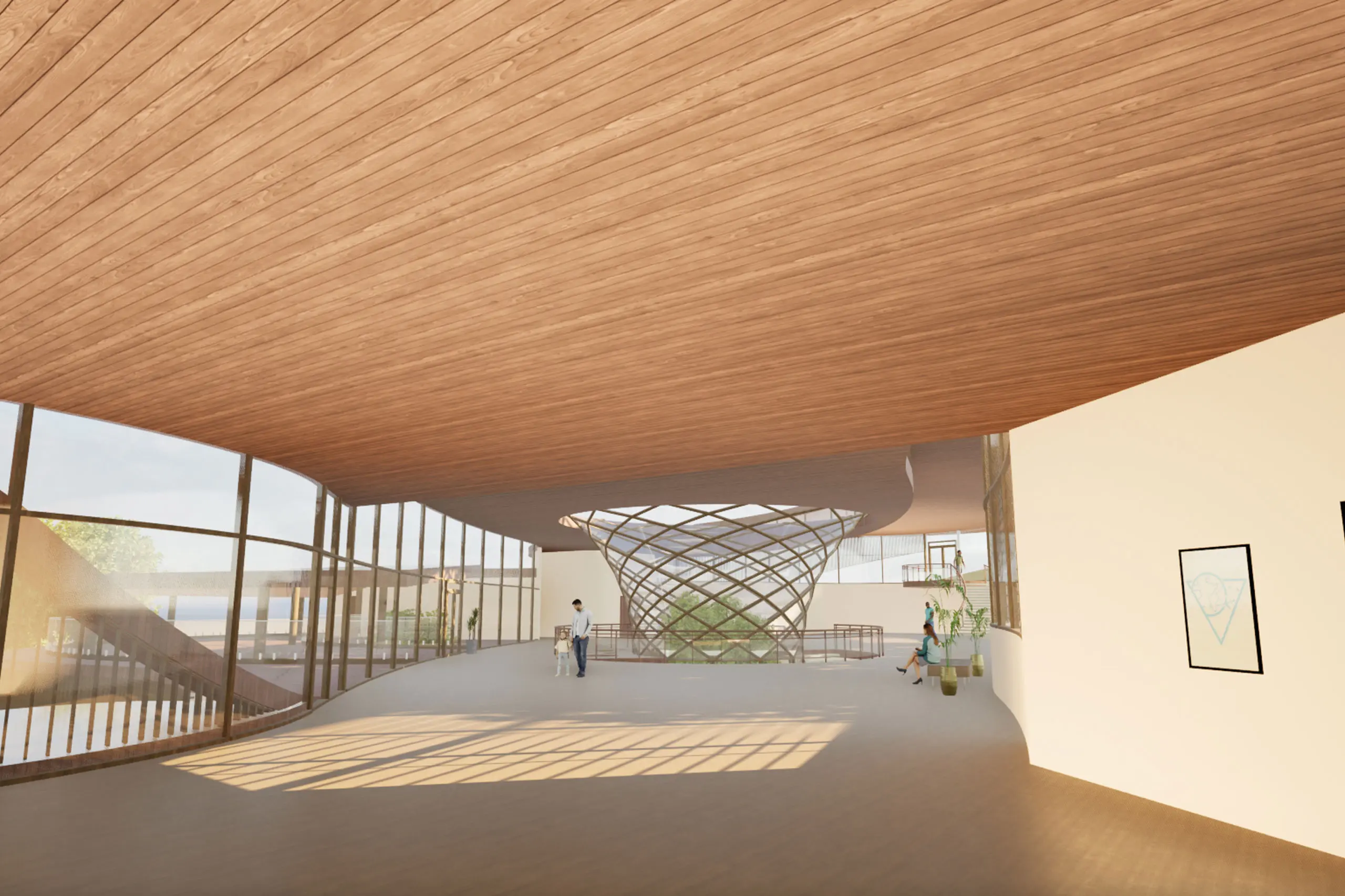
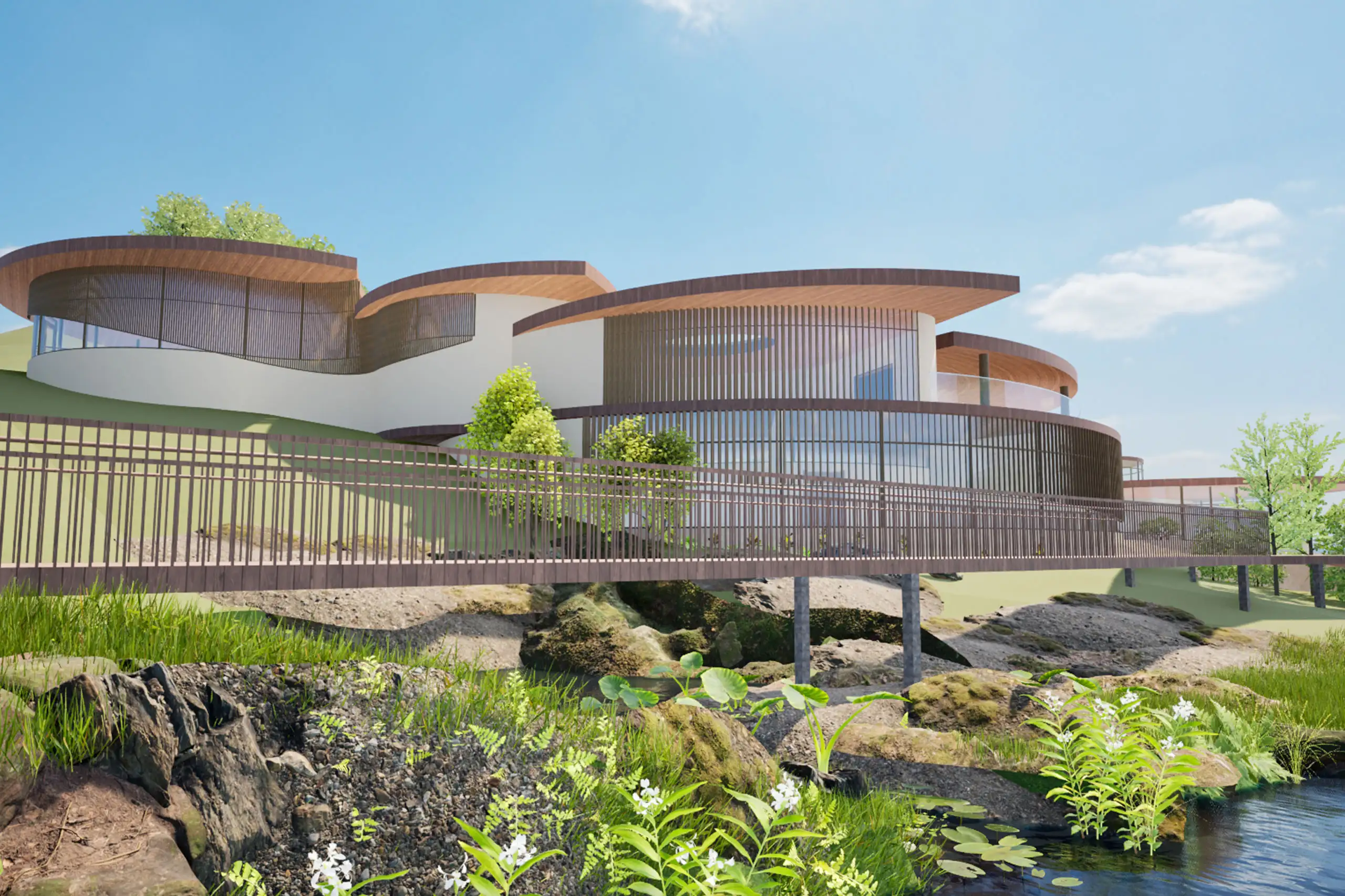
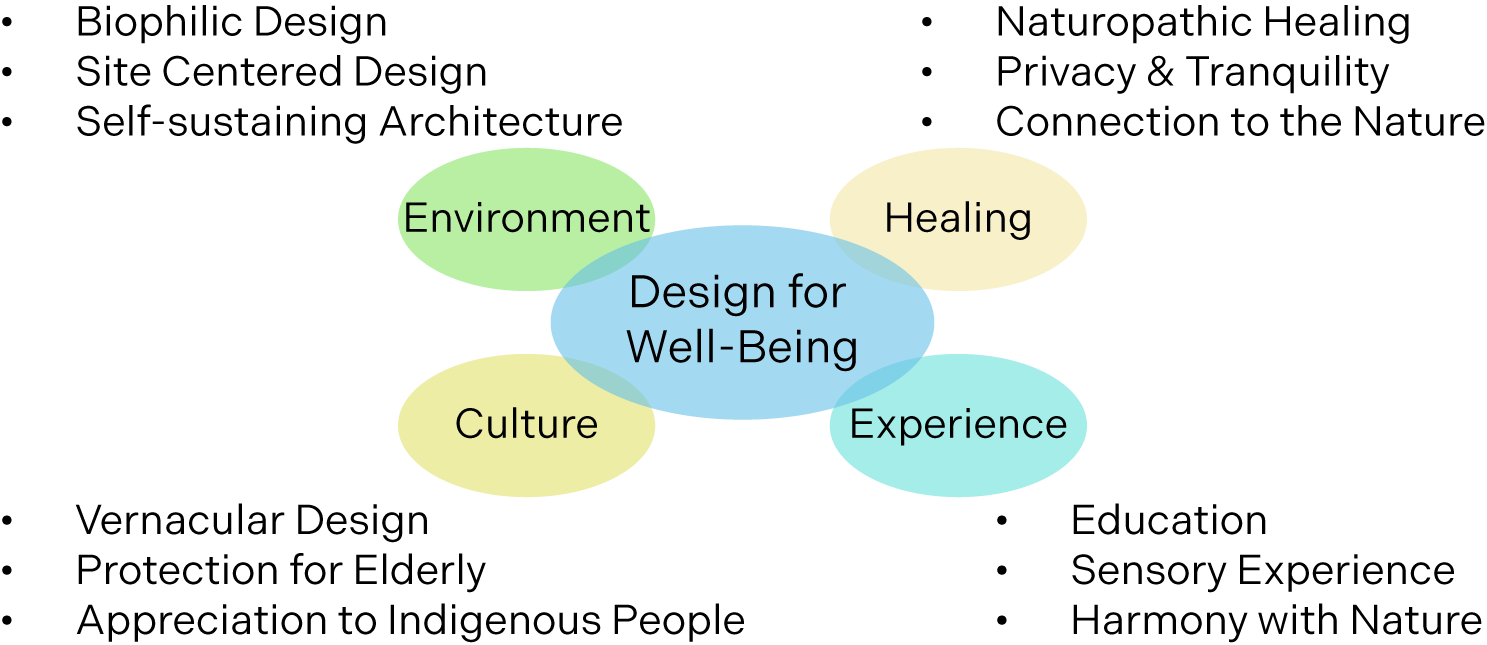
The concept of this design that pursues well-being emerged by expressing the beautiful curves reminiscent of the wind, while emphasizing functionality. This concept goes beyond a mere structure, aiming for a harmonious space that provides tranquility and joy to its visitors. The goal is to create a space where people can experience comfort in their daily lives.

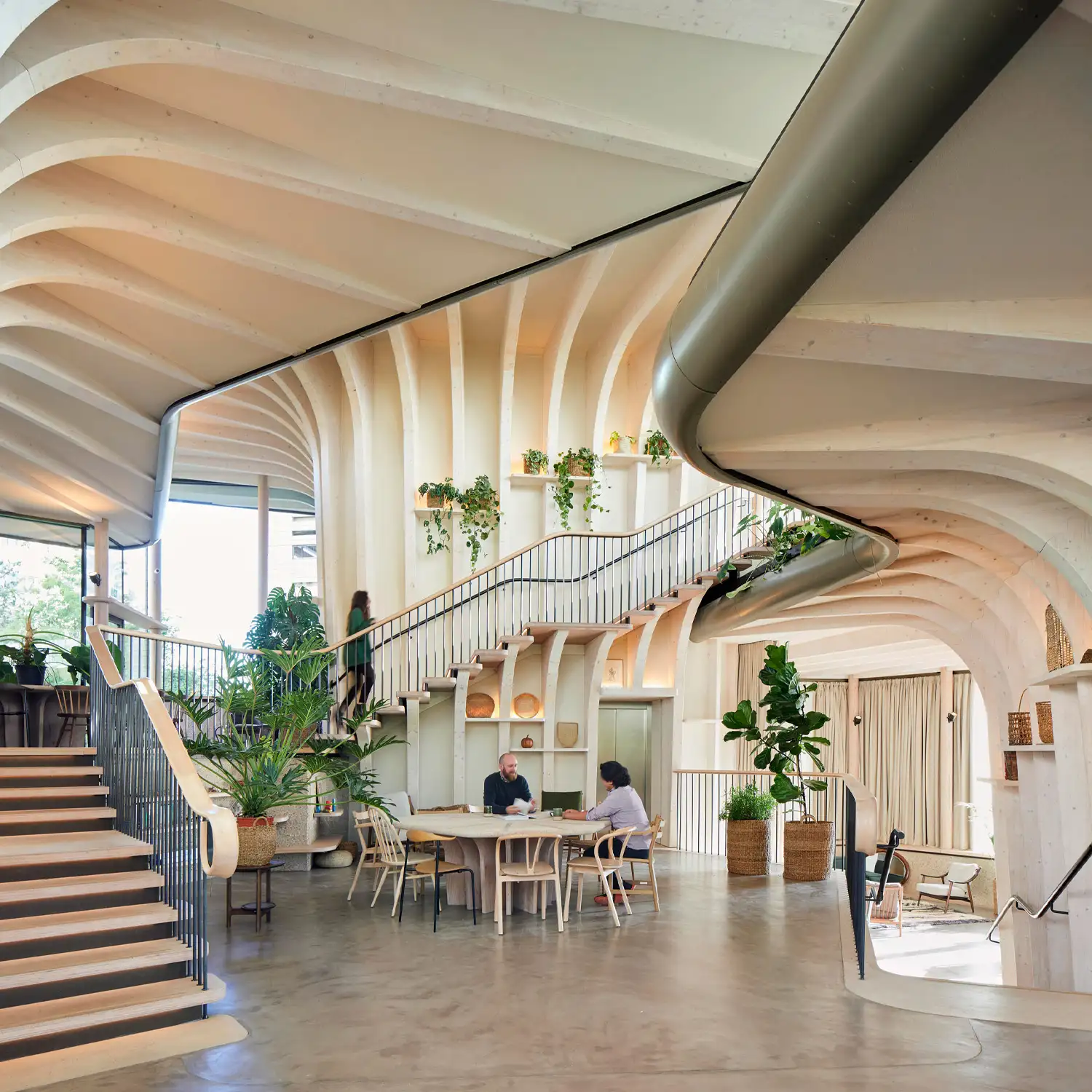
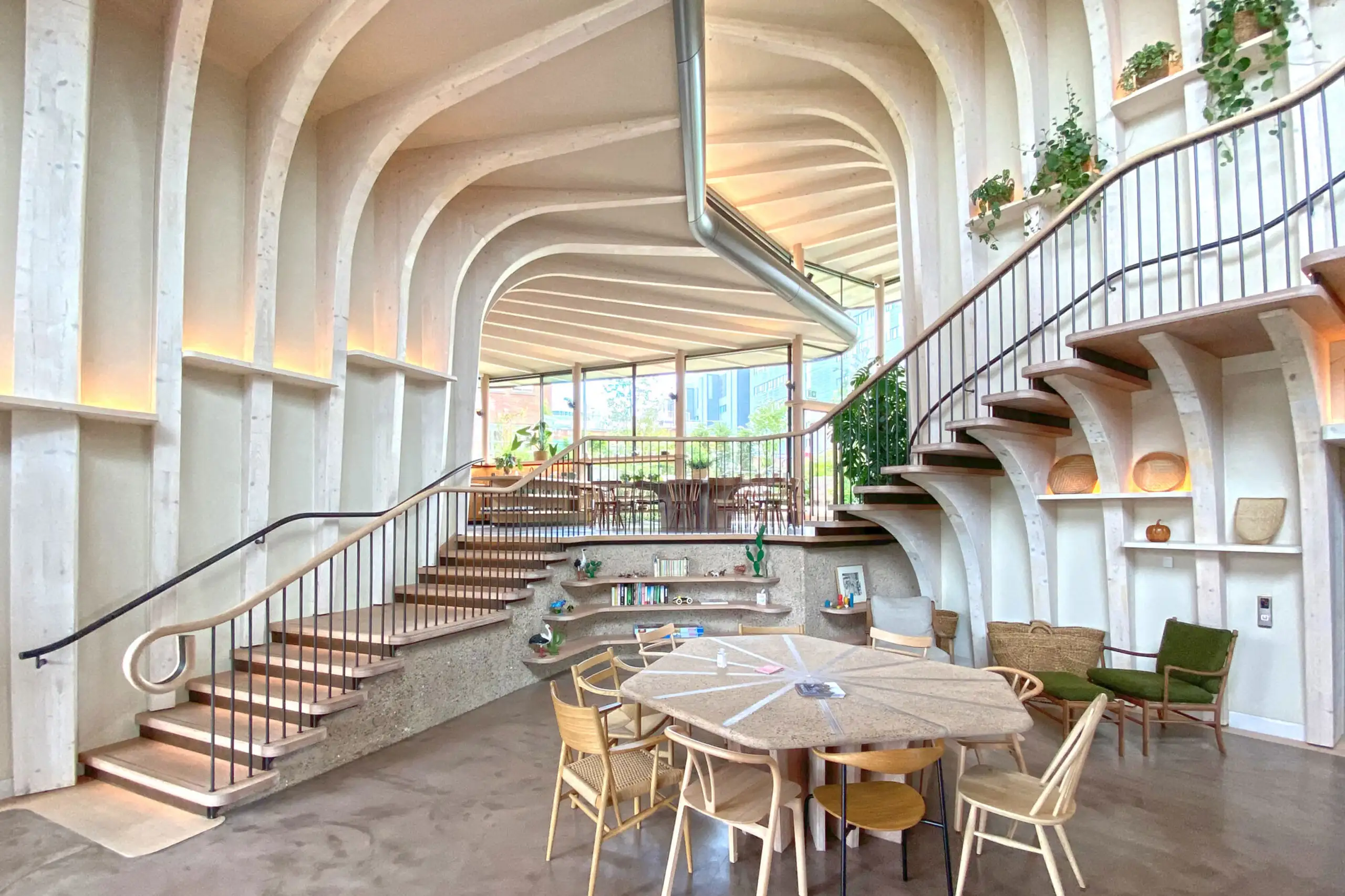
maggie's-leeds-centre-interior

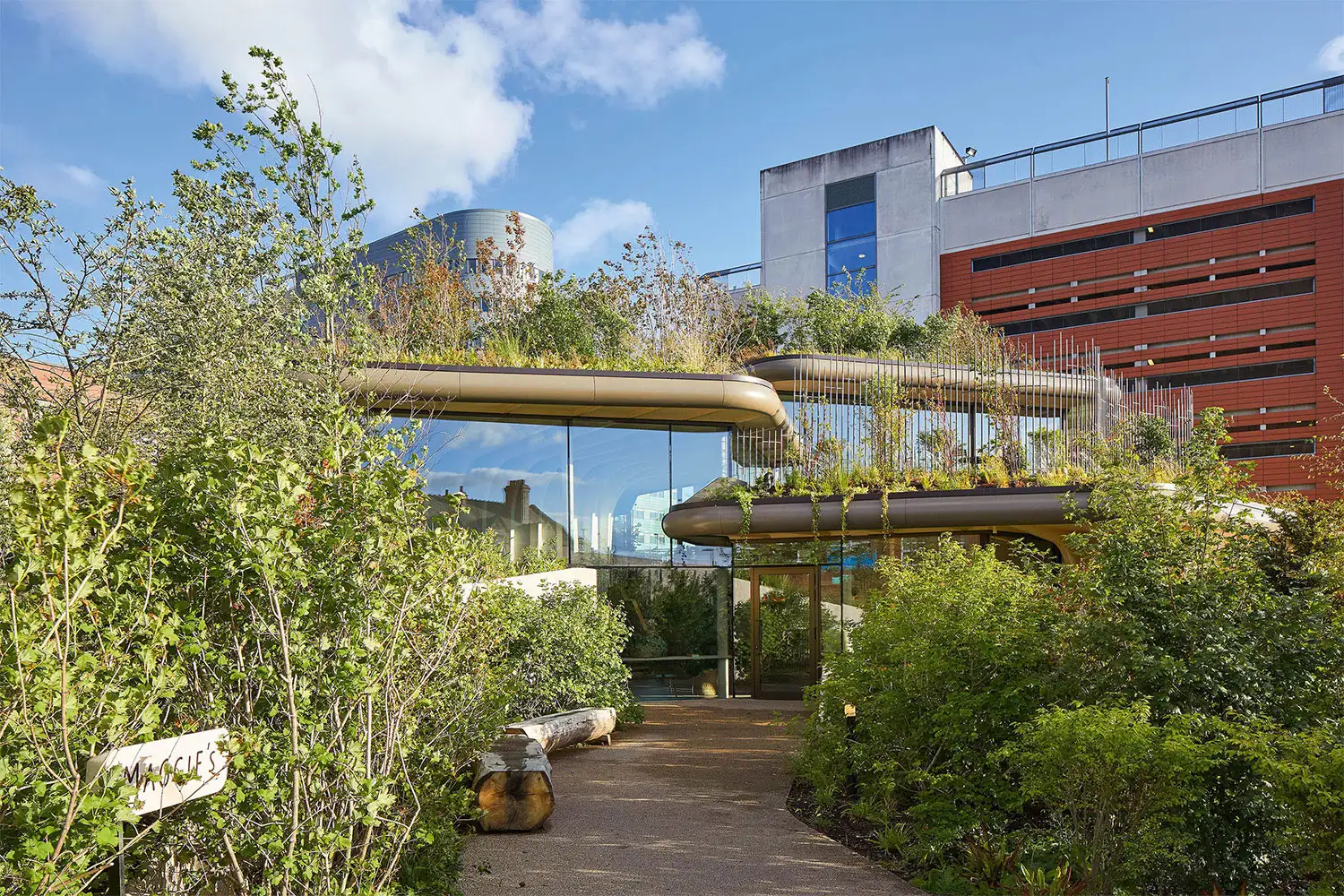
Healing Architecture: Maggie’s Leeds Centre

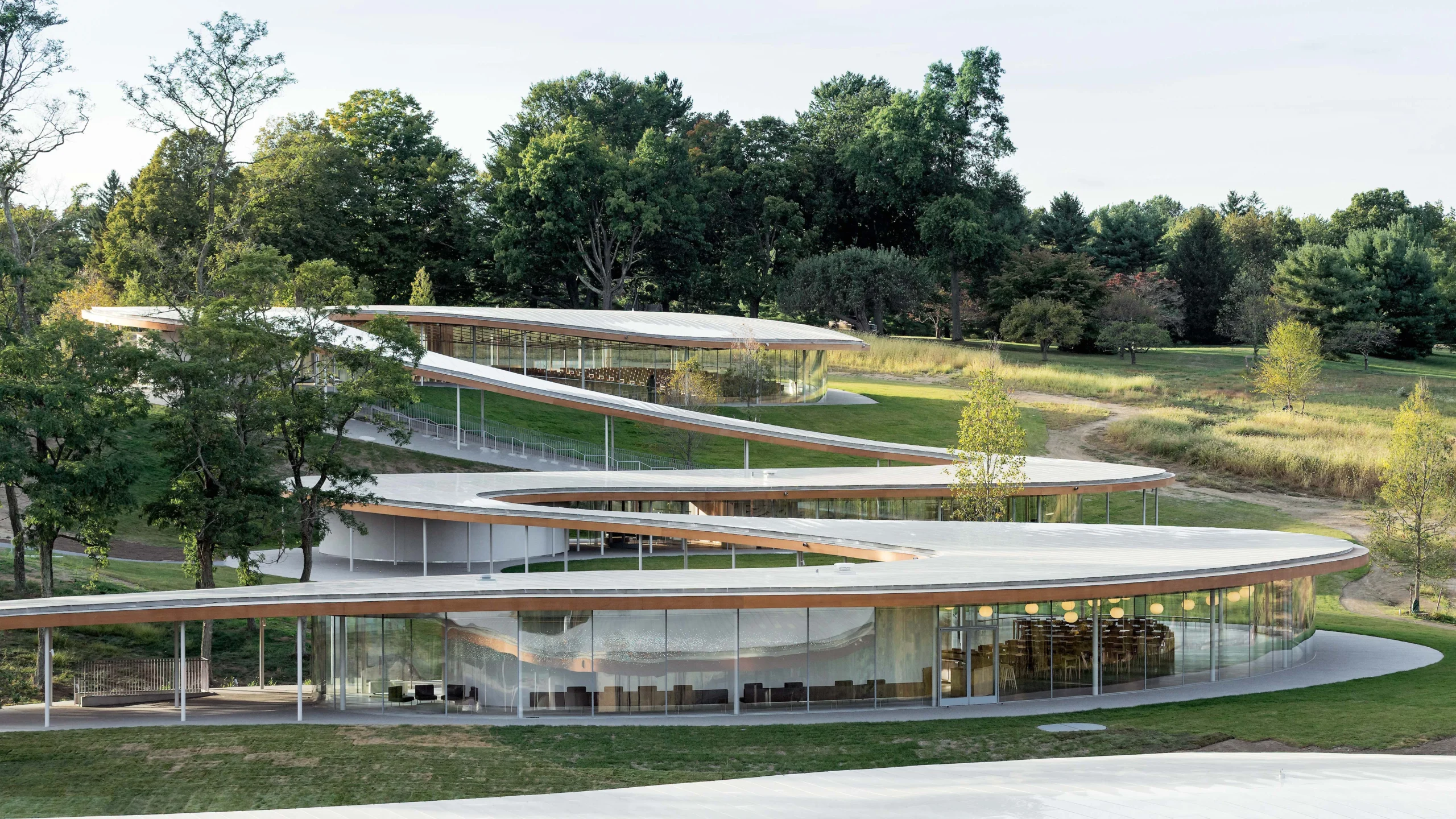
Grace Farms

Grace Farms: A Harmonious Blend of Architecture and Nature

Architectural Precedent

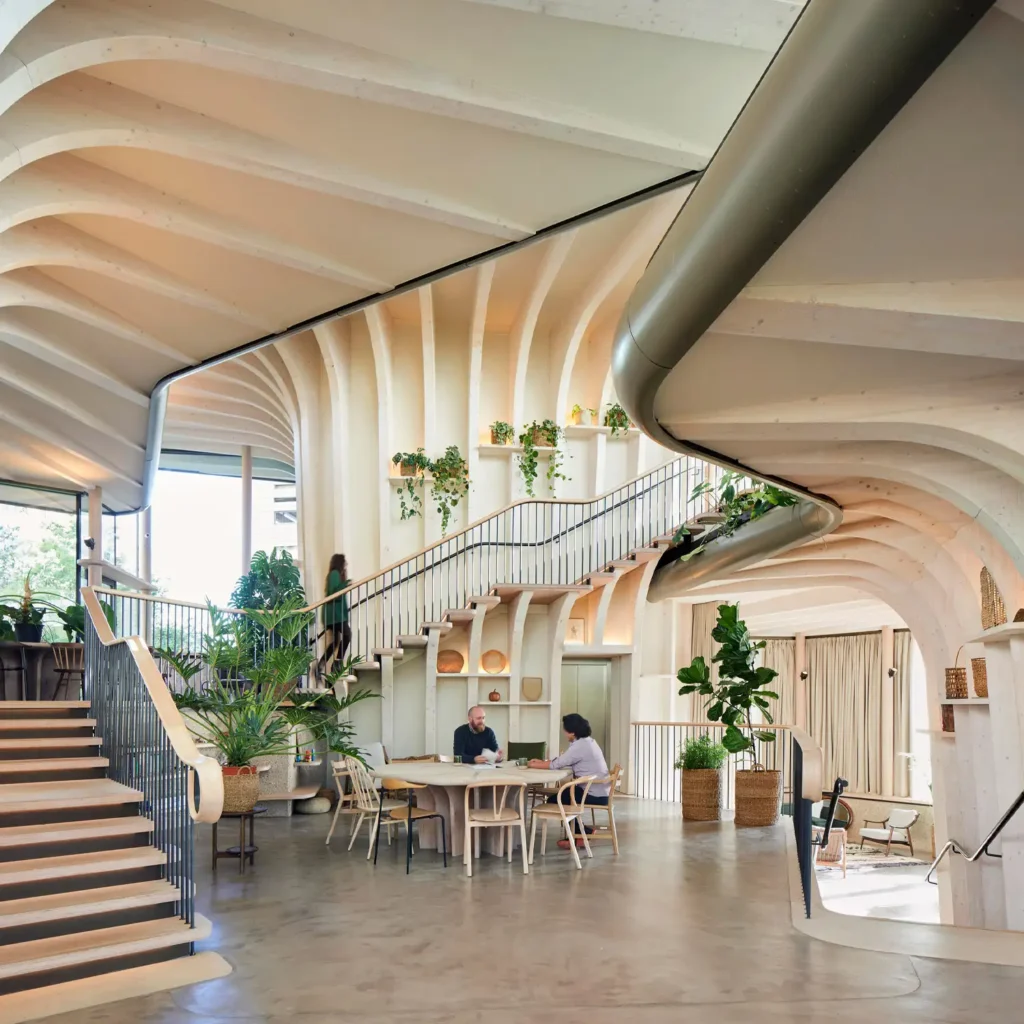
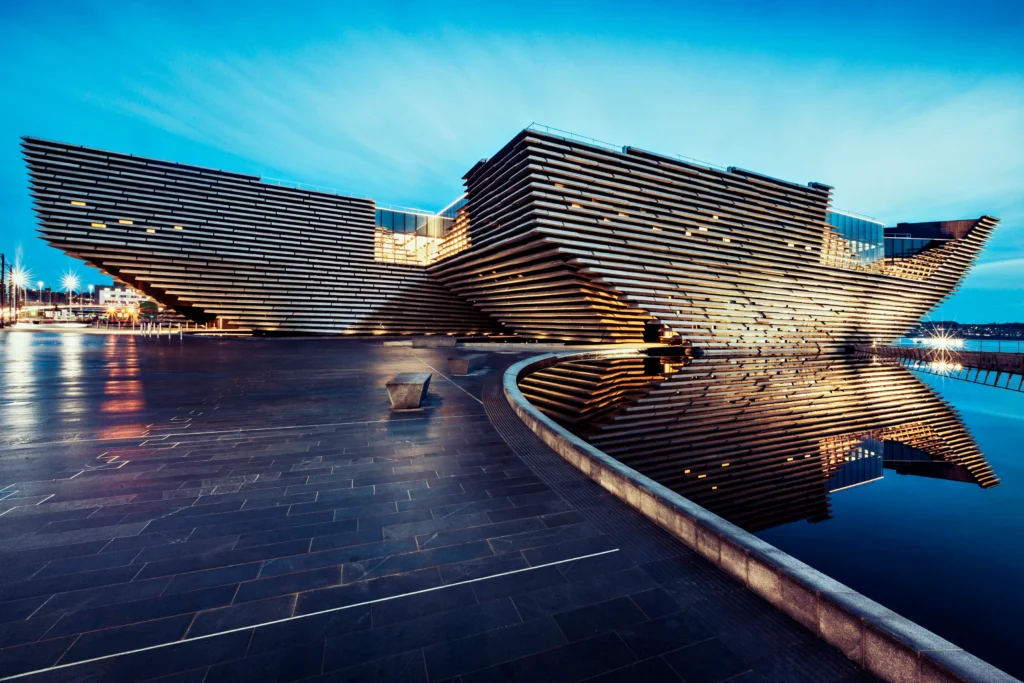
Maggie’s Leeds Centre is a charity providing free support for cancer patients. The belief driving this design is that thoughtful architecture can contribute to people’s well-being. Situated on a sloped site similar to our project, it offers a space where everyone can feel a sense of peace, using sustainable materials.

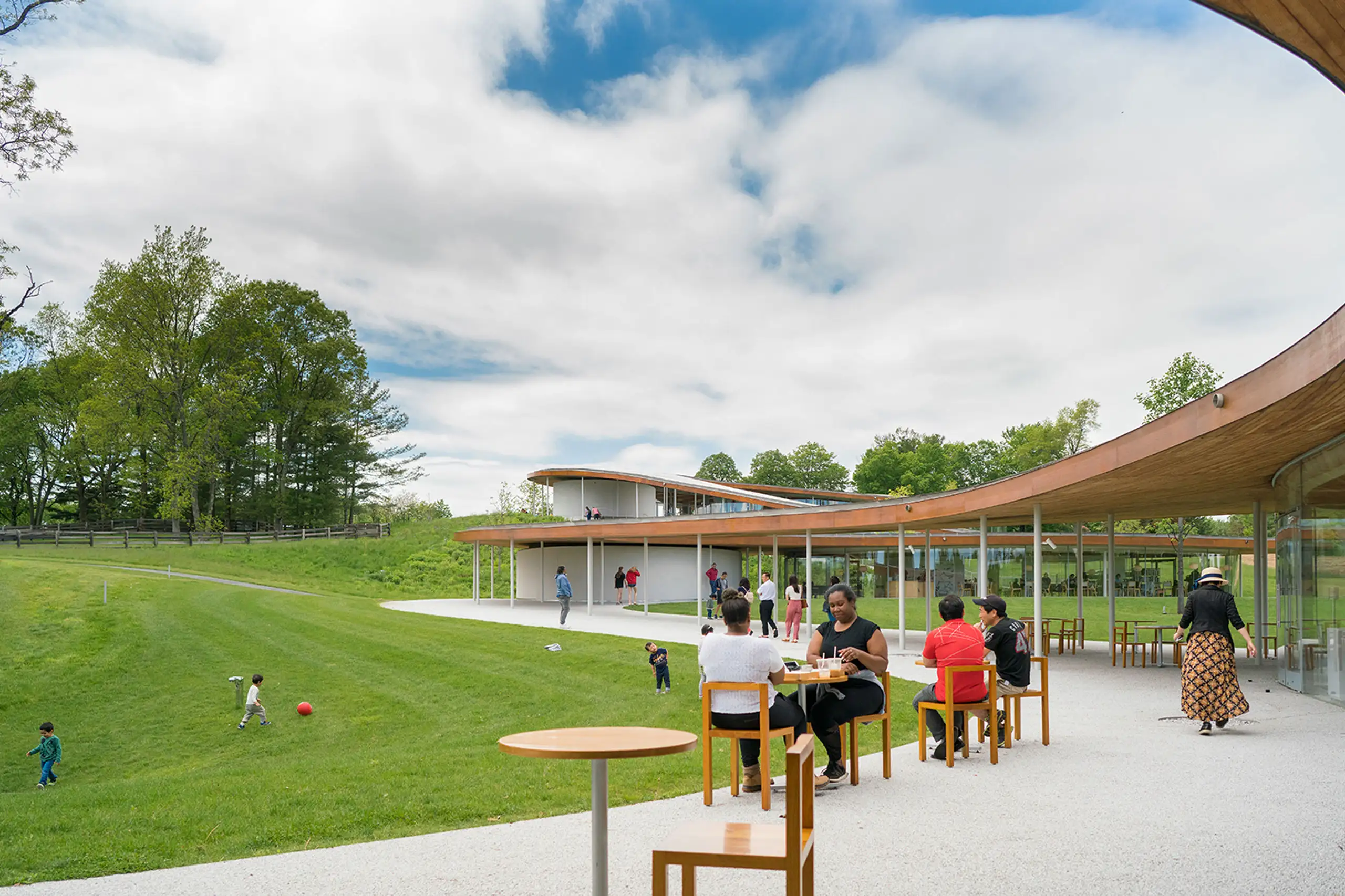
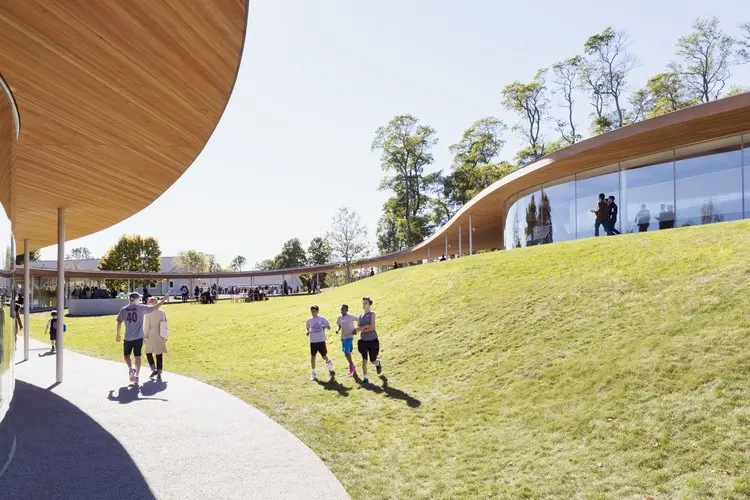
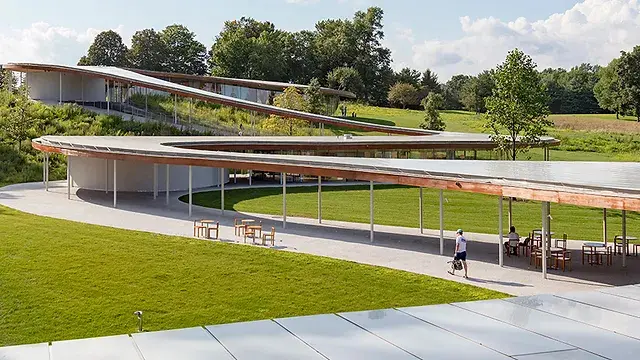
Grace Farms is an architecture to harmonizes with nature, and for visitors to enjoy the beauty of the environment through the spaces created by this river-inspired structure. Grace Farms’ river seamlessly blends into the undulating landscape, starting from a hill and gently descending a slope to form pond-like spaces.

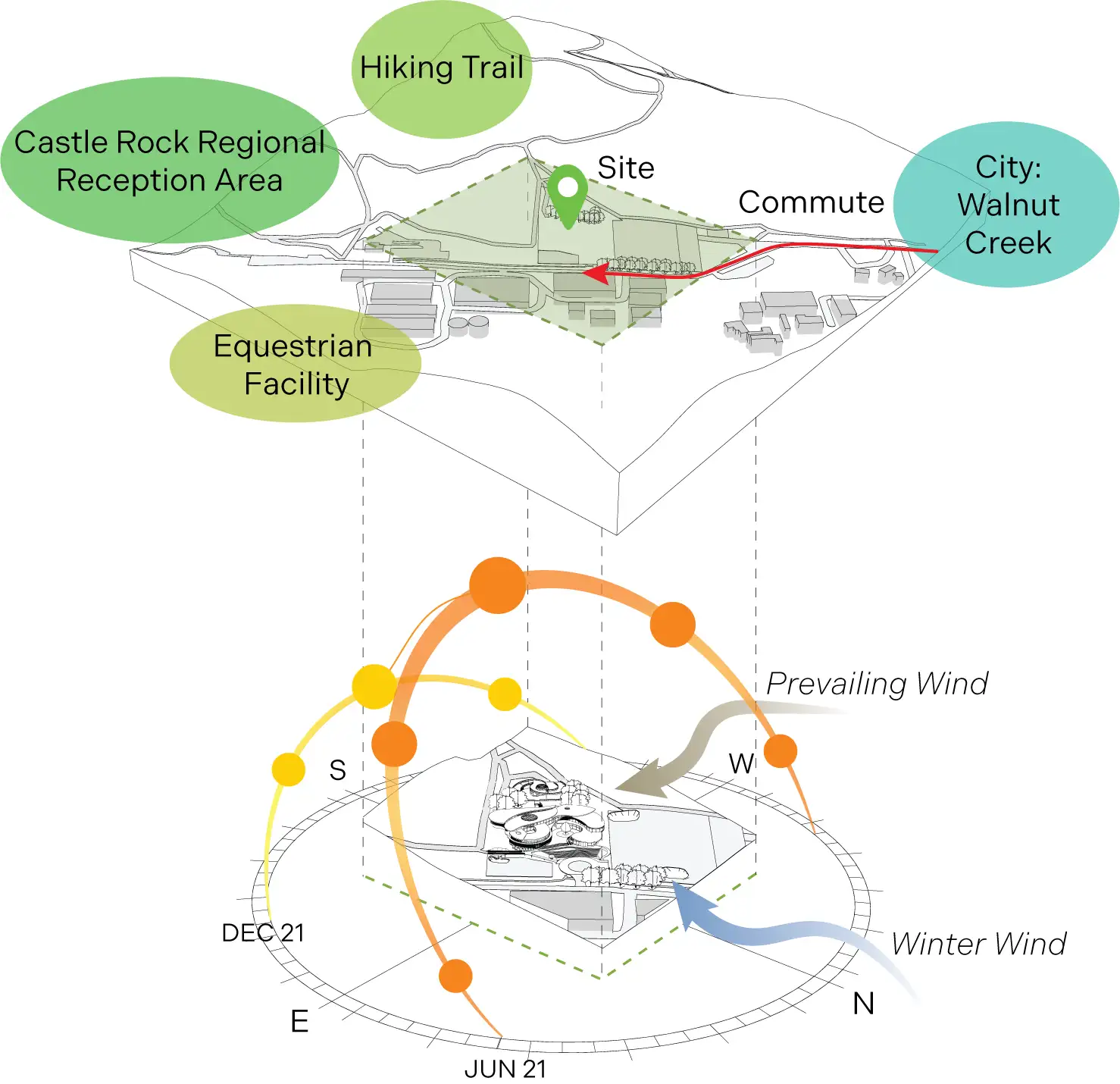
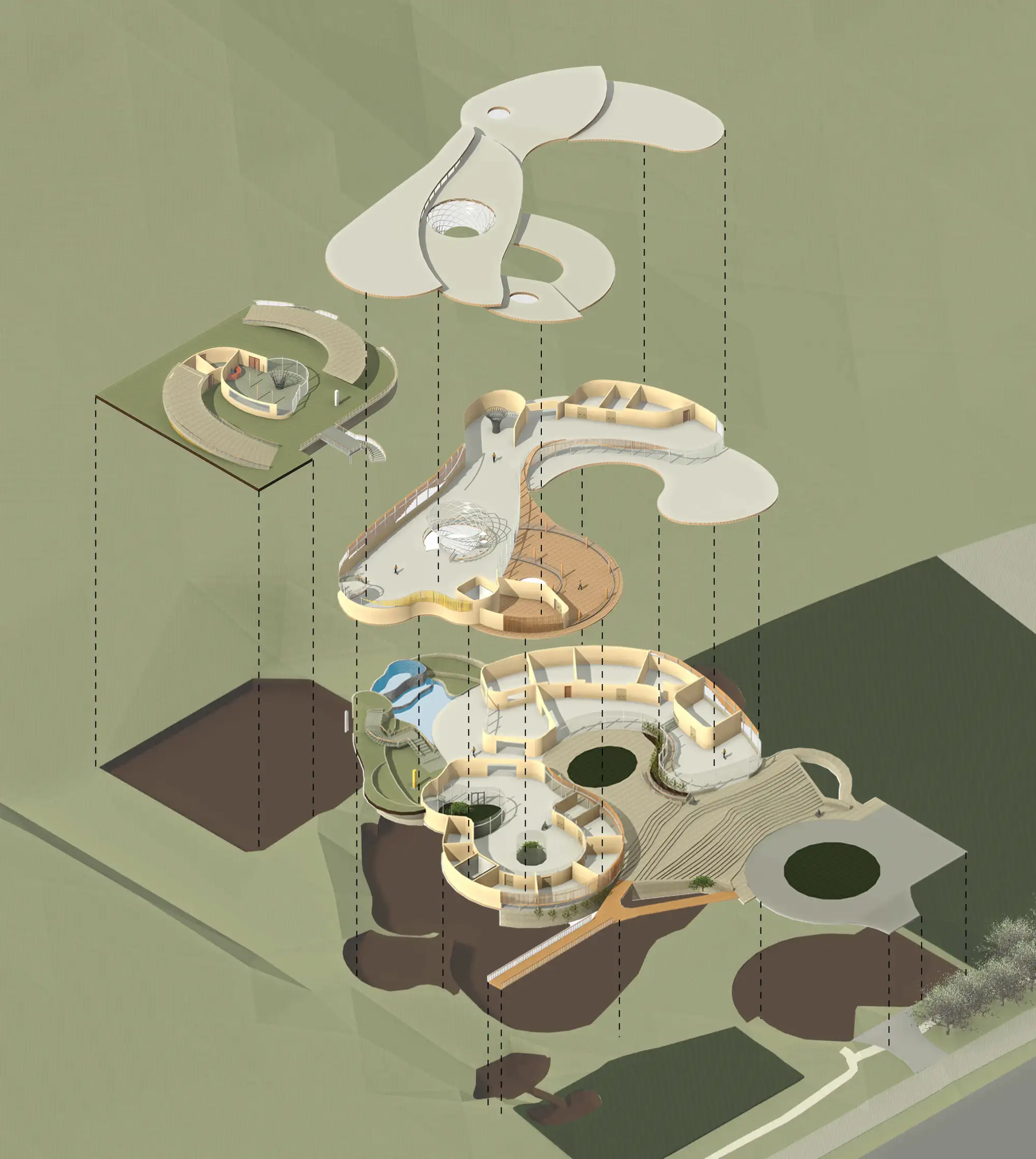
Floor Plan & Site Analysis

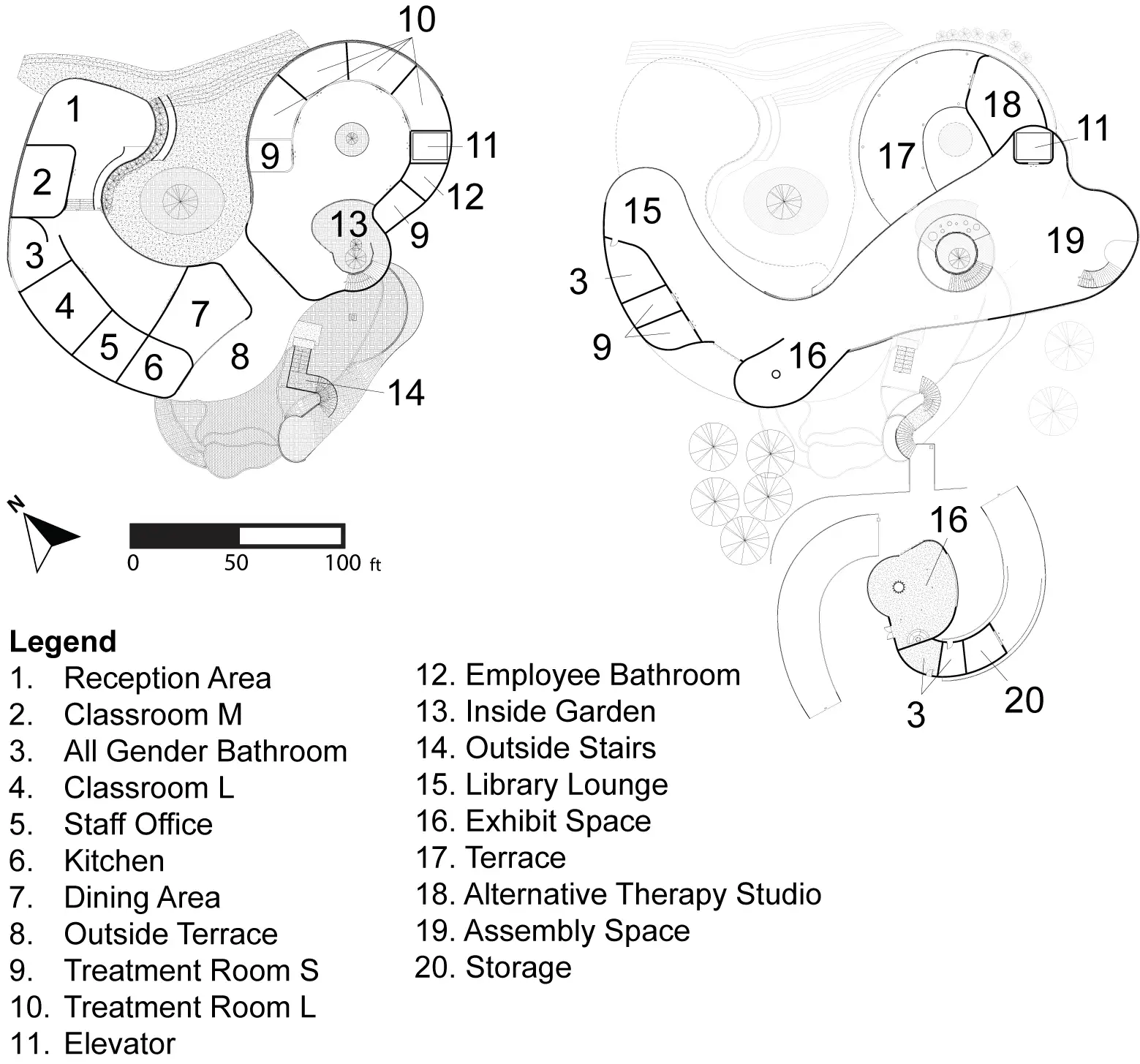
Our building is located at the entrance of the hiking trail, so it is designed to cater to both hikers and visitors, ensuring a comfortable experience for their respective purposes.

The ground floor is divided into two parts by a pathway (tunnel) that extends to the hiking trail, effectively integrating the building as part of the trail. This pathway connects to the outside dining area (No.8 on the floor plan), stairs (No.14), and the small project “Spiral” which is for hikers to take a break and learn about indigenous people. 

Various paths also connect to the trail, providing visitors with different perspectives to appreciate the charm of the building and the surrounding nature.

If You Climb the Stairs, You will Reach the "Spiral", Which Serves as an Observation Deck, Rest Area, and Exhibition Space

A Little Explanation of Shape of the Wind - Spiral

Site

This architectural design was created with the assumption that it will be built on a hiking trail in Walnut Creek, California. Inspired by the natural beauty of Walnut Creek and the unique atmosphere of the region, this design emphasizes integration with the local environment. Focusing on open structures and maximizing the use of natural light, it aims to provide visitors with a serene and exquisite space.

Section Cut

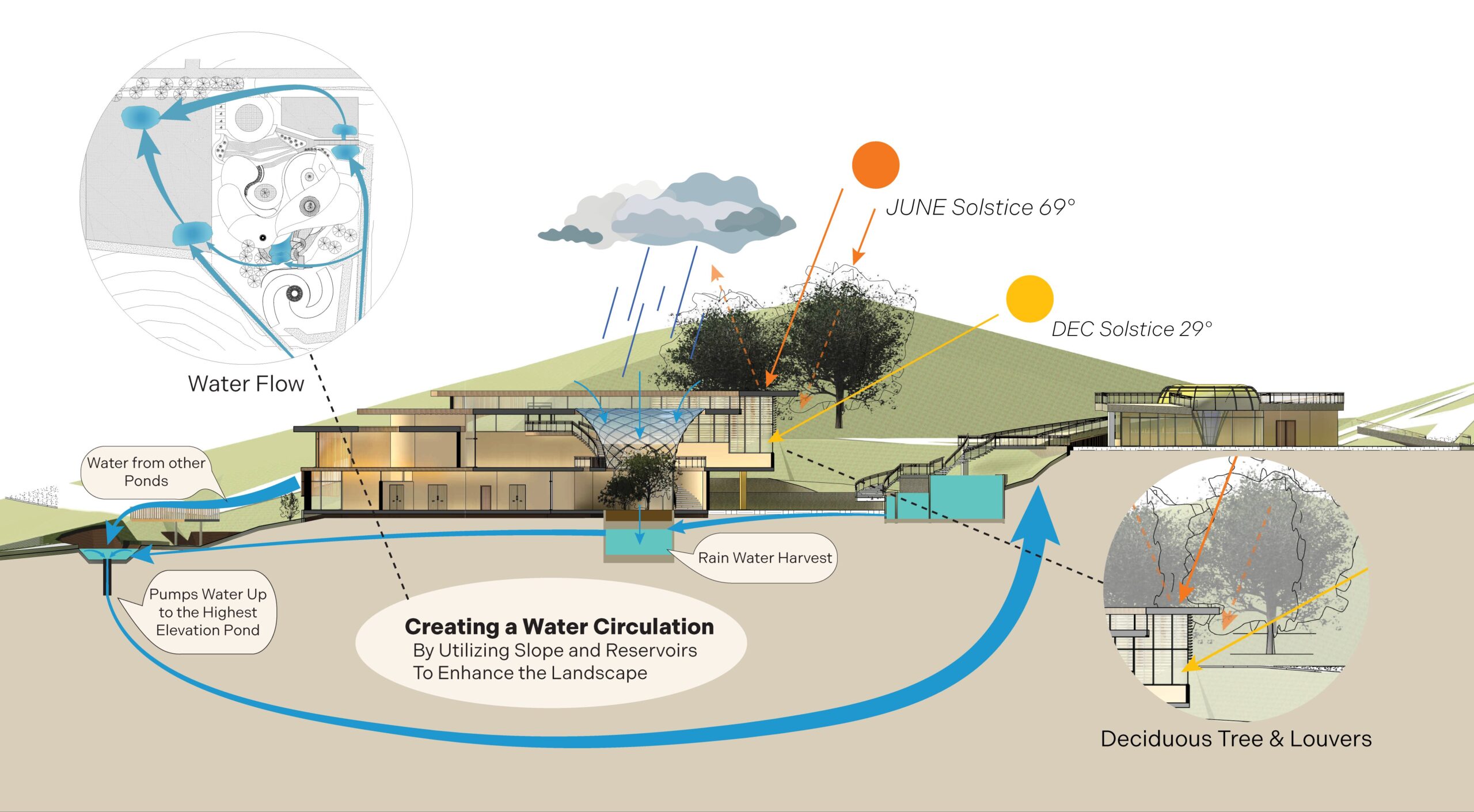
Our site is situated on a hill, with an open area that receives direct sunlight. Consequently, during the summer, the land tends to dry up, leaving it devoid of greenery. However, I believe we can bring back greenery even in the summer by effectively utilizing this hill.

As a specific idea, we could create multiple ponds along the slope of the hill and establish a system where water from the bottom pond can be circulated to the top pond. This would create a cycle of water circulation throughout the hill, promoting the revitalization of greenery.

Simultaneously, the building itself could store water and share the greywater (reusable household wastewater) with bathrooms inside and ponds outside the structures.

Designed by: Raku Yamazaki

Hello. I’m Raku, a college student pursuing architecture. My vision is to make the world greener, and more peaceful through sustainable design. I’m dedicated to weaving nature, functionality, and aesthetic appeal into every project. Let’s build a sustainable future together – one blueprint at a time. 

Shape of the Wind Read More »

Grace Farms: A Harmonious Blend of Architecture and Nature

Introduction

Grace Farms, nestled in the serene landscape of New Canaan, Connecticut, stands as a testament to the harmonious fusion of architecture and nature. This 80-acre sanctuary, preserved by the non-profit Grace Farms Foundation, invites visitors to experience nature, foster community, pursue justice, and explore faith. Let’s delve into the captivating story of Grace Farms.

The Vision Behind Grace Farms

At the heart of Grace Farms lies a profound vision: to create a space where people can connect with nature, art, and each other. The Foundation’s commitment to preserving open space allows visitors to immerse themselves in the beauty of native flora and fauna. Grace Farms becomes a canvas for personal growth, community engagement, and spiritual reflection.

Design and Architecture

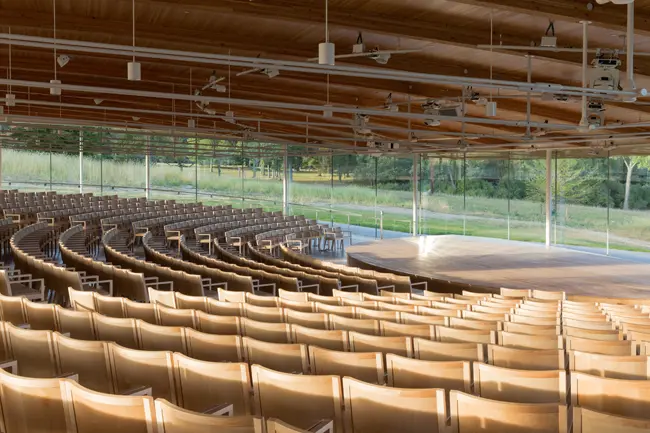
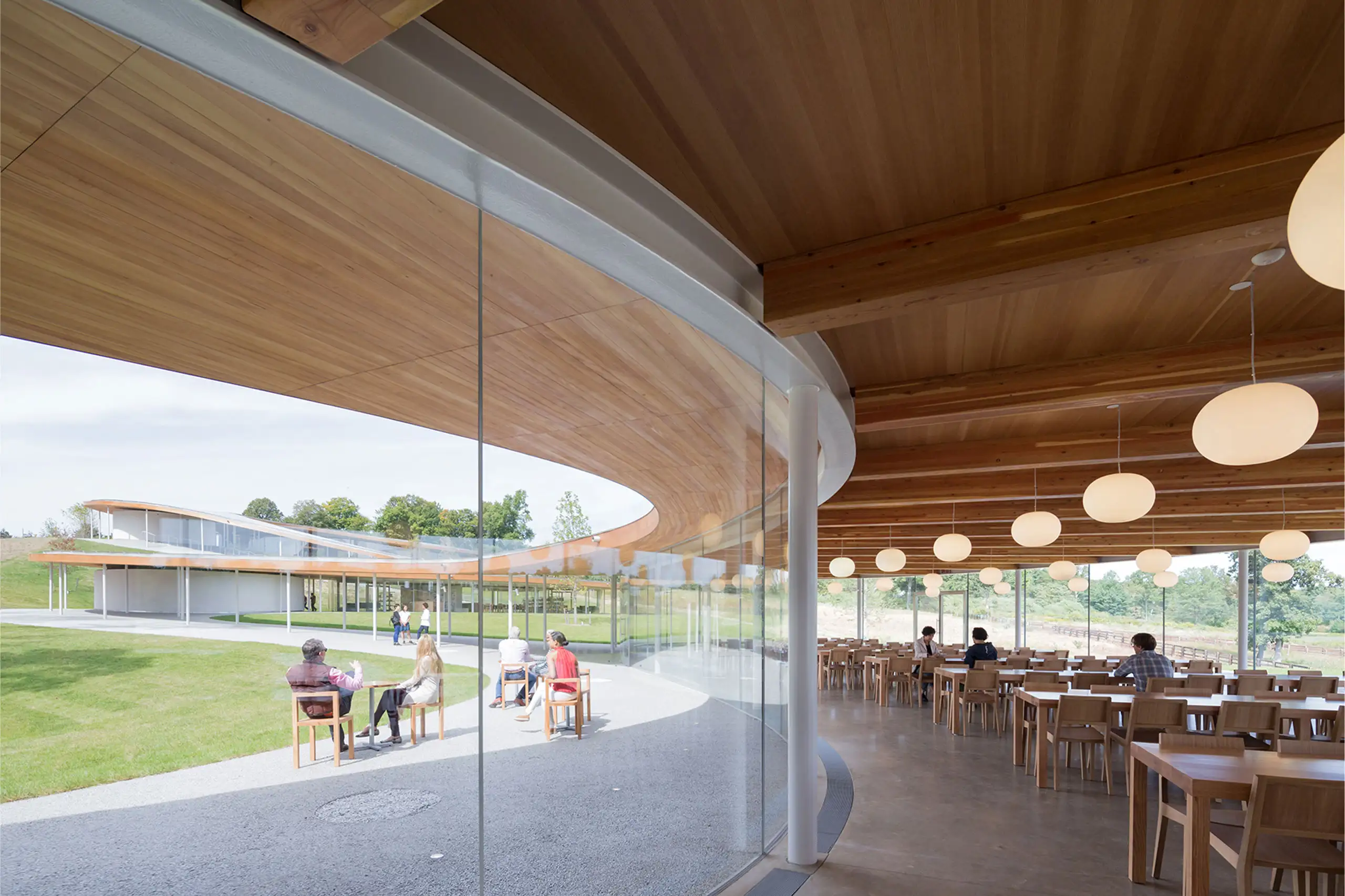
The architectural marvel of Grace Farms is attributed to the renowned Japanese firm SANAA – led by architects Kazuyo Sejima and Ryue Nishizawa. Their design blurs the boundaries between indoors and outdoors. Transparent glass walls allow natural light to flood the interior, while the undulating roof seems to float above the ground. Visitors move seamlessly through courtyards, walkways, and glass-wrapped volumes, all while staying connected to the surrounding landscape.

Sustainability and Environmental Impact

Grace Farms exemplifies sustainability. Fifty-five geothermal wells provide efficient heating and cooling, minimizing its environmental footprint. Rainwater harvesting supports the lush meadows and native plantings. The commitment to eco-conscious design ensures that Grace Farms treads lightly on the earth.

The River Building

The iconic River Building, the centerpiece of Grace Farms, embodies the architectural directive. It flows gently down the landscape, mirroring the natural contours. Within its transparent walls, visitors find a library, an amphitheater, and communal spaces. Here, art, culture, and community intersect seamlessly, blurring the lines between structure and environment.

The Landscape and Nature

Grace Farms’ 80 acres offer a sensory feast. Walking trails wind through meadows, inviting contemplation. The whisper of leaves and the scent of wildflowers accompany visitors as they explore. Grace Farms becomes a sanctuary for both humans and wildlife, fostering biodiversity and environmental stewardship.

Community Engagement and Programs

Grace Farms thrives as a hub of activity. Art exhibitions, wellness programs, and thought-provoking lectures fill its calendar. Whether sipping coffee in the sunlit courtyard or attending a family-friendly art class, visitors find connection and inspiration. Grace Farms becomes a canvas for shared experiences.

Impact and Recognition

The impact of Grace Farms extends beyond its physical boundaries. Locally and globally, it inspires conversations about architecture, sustainability, and community. Awards and accolades recognize its transformative role, but the true measure of success lies in the lives touched by this extraordinary space.

Conclusion

As you stand on the grounds of Grace Farms, surrounded by the interplay of light, glass, and nature, you realize that this place transcends mere architecture. It’s an invitation; to explore, to connect, and to find grace in the simplest moments. Visit Grace Farms, and let its beauty unfold before you. Grace Farms: a symphony of design, nature, and human spirit.

Location: Visit this Architecture!

Cite: <https://gracefarms.org/>

Grace Farms: A Harmonious Blend of Architecture and Nature Read More »

Healing Architecture: Maggie’s Leeds Centre

Introduction

Maggie’s Leeds Centre, nestled within the St. James’s University Hospital campus in Leeds, England, stands as a testament to the harmonious fusion of design and empathy. As visitors step through its doors, they enter a realm where architectural lines embrace vulnerability, and where healing transcends mere bricks and mortar.

The Mushroom Planters: Whimsy and Comfort

Three mushroom-shaped planters rise from the earth, cradling counseling rooms within their curved forms. These cozy spaces – more than mere architectural features – are sanctuaries for emotional conversations. Here, patients and their loved ones share fears, hopes, and dreams over a cup of tea, cocooned by the gentle curvature of timber and the promise of understanding.

The Heartbeat: The Kitchen

At the core of Maggie’s Leeds lies the kitchen; a bustling hub where aromas of freshly brewed tea and homemade cookies waft through the air. Here, patients, caregivers, and staff gather. Laughter mingles with the clinking of cups. It’s a place to nourish both body and soul, where the act of preparing a meal becomes an act of healing.

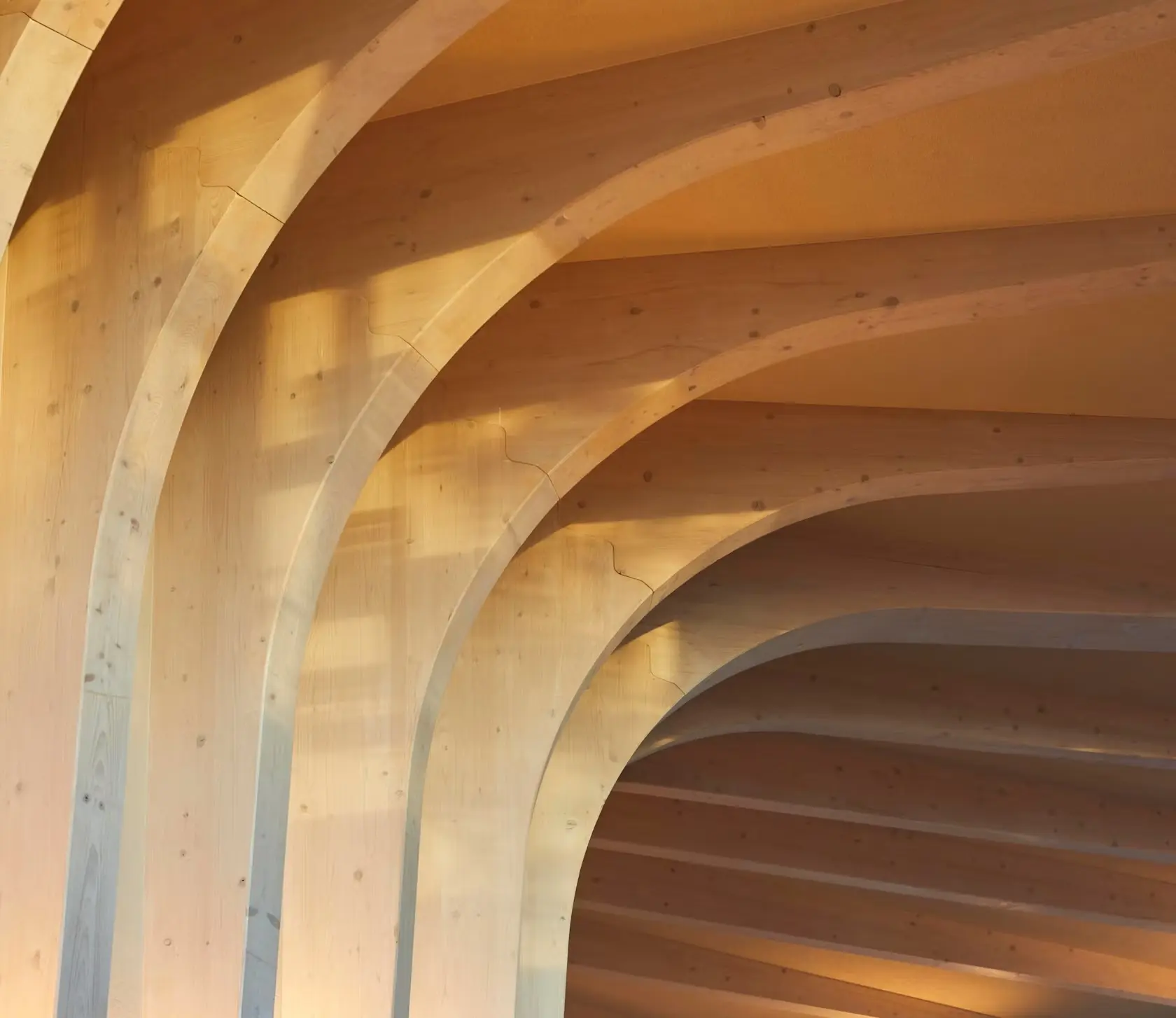
Curving Timber Gills and Social Nooks

Beyond the counseling rooms and kitchen, communal areas unfold gracefully. Soft light bathes the lounge, inviting quiet reflection and shared stories. The library, lined with inspiring books, beckons curious minds. An exercise room, where resilience takes shape, mirrors the strength of those who tread its floors. And all around, the curving timber gills shelter moments of connection and solace.

Yorkshire Woodlands Rooftop Garden: A Living Canvas

Step onto the rooftop garden—a slice of Yorkshire’s wild beauty. Native English plants sway in the breeze, their colors changing with the seasons. Visitors become stewards, tending to 23,000 bulbs and 17,000 plants. It’s a living canvas, inspired by Maggie Keswick Jencks’ love for gardening. Here, healing takes root in the soil, and hope blooms anew with each petal.

Tactile Materials and Soft Light

Inside, the design whispers healing secrets. Natural materials—wood, stone, and soft fabrics—invite touch. Lime plaster walls absorb and release warmth, maintaining the internal humidity of this naturally ventilated space. Window sills await personal treasures—a photo, a seashell, a cherished trinket—infusing the architecture with individual stories.

The Heart Tables: Where Conversations Bloom

In the heart of Maggie’s Leeds, two tables stand proud. Their design echoes the building’s timber fins. Crafted from cork and engineered beech timber, they invite conversation, creativity, and cups of tea. Here, stories unfold, friendships blossom, and hope takes root. These tables are more than furniture; they are vessels for shared experiences and shared humanity.

Positivity in Every Corner

As visitors wander through Maggie’s Leeds Centre, positivity blooms like wildflowers. It’s in the laughter shared over a puzzle, the quiet moments by the window, and the warmth of a stranger’s smile. This isn’t just architecture; it’s a sanctuary where healing is woven into every detail. The very air breathes compassion, and the walls echo with resilience.

Conclusion

Maggie’s Leeds Centre is a healing space where architecture and compassion intertwine. With features like mushroom-shaped planters and a bustling kitchen, it exudes comfort and empathy. The rooftop garden and timber interiors evoke harmony with nature. And the connections and conversations here nurture hope and healing.

Location: Visit this Architecture!

Cite: <https://www.archdaily.com/941540/maggies-leeds-centre-heatherwick-studio>
<https://www.heatherwick.com/project/maggies/>

Healing Architecture: Maggie’s Leeds Centre Read More »

A Little Explanation of “Shape of the Wind” – Outside Dining Area

※This is a Description of a Part of My Architectural Project

Shape of the Wind - Front View

Shape of the Wind

You can see the whole project description here↑

Brief Description of this Area

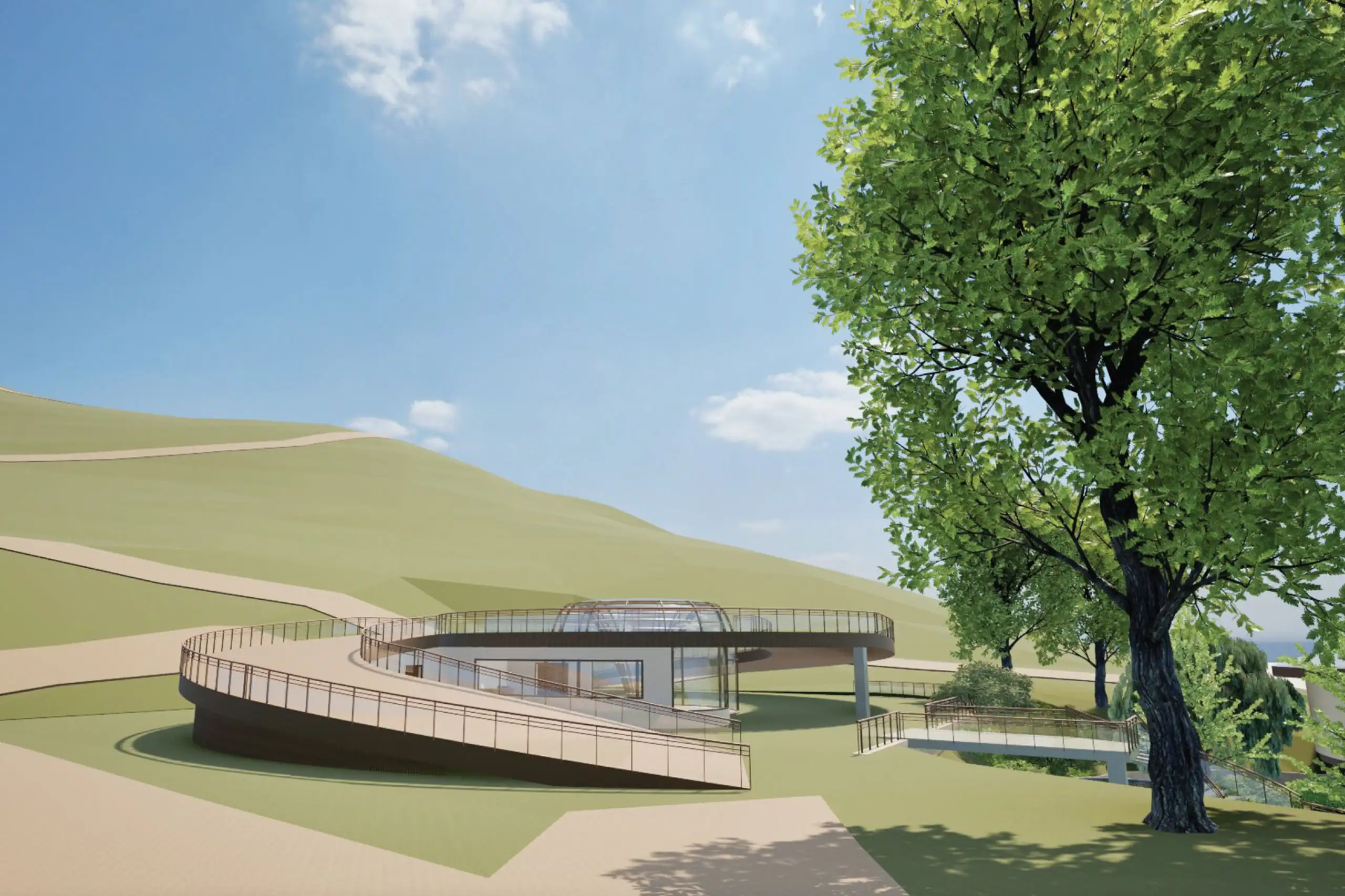
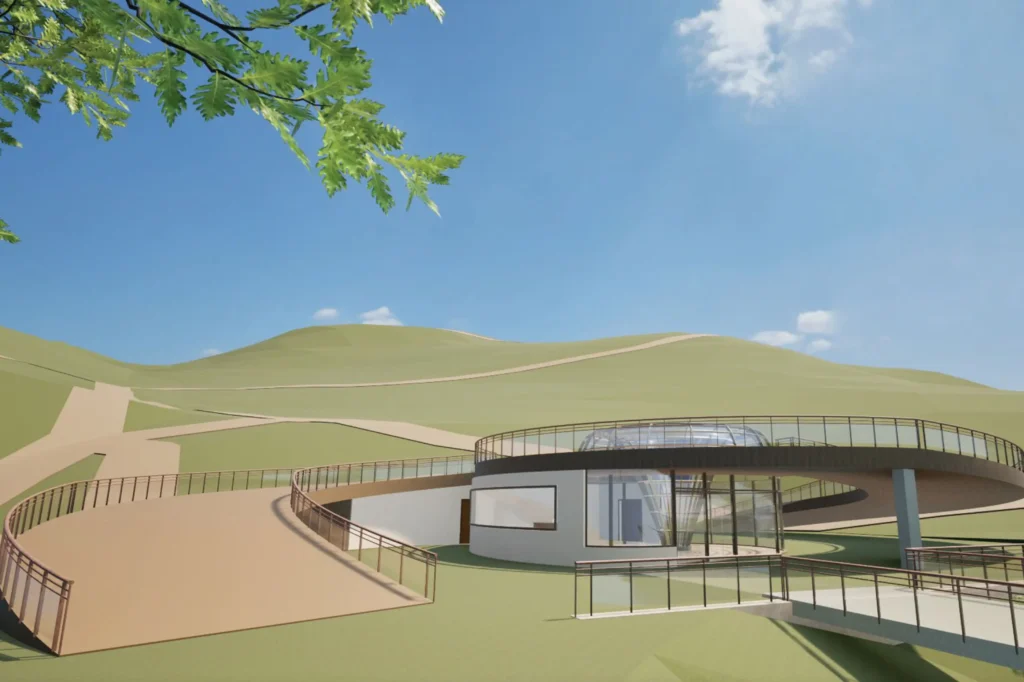
“Shape of the Wind” is an architectural design for a non-profit organization focused on the education and practice of natural therapy. The main building, Shape of the Wind, is situated just below a prominent hill, while on top of the hill stands the “Spiral,” functioning as an observation deck, rest area, and exhibition space. 

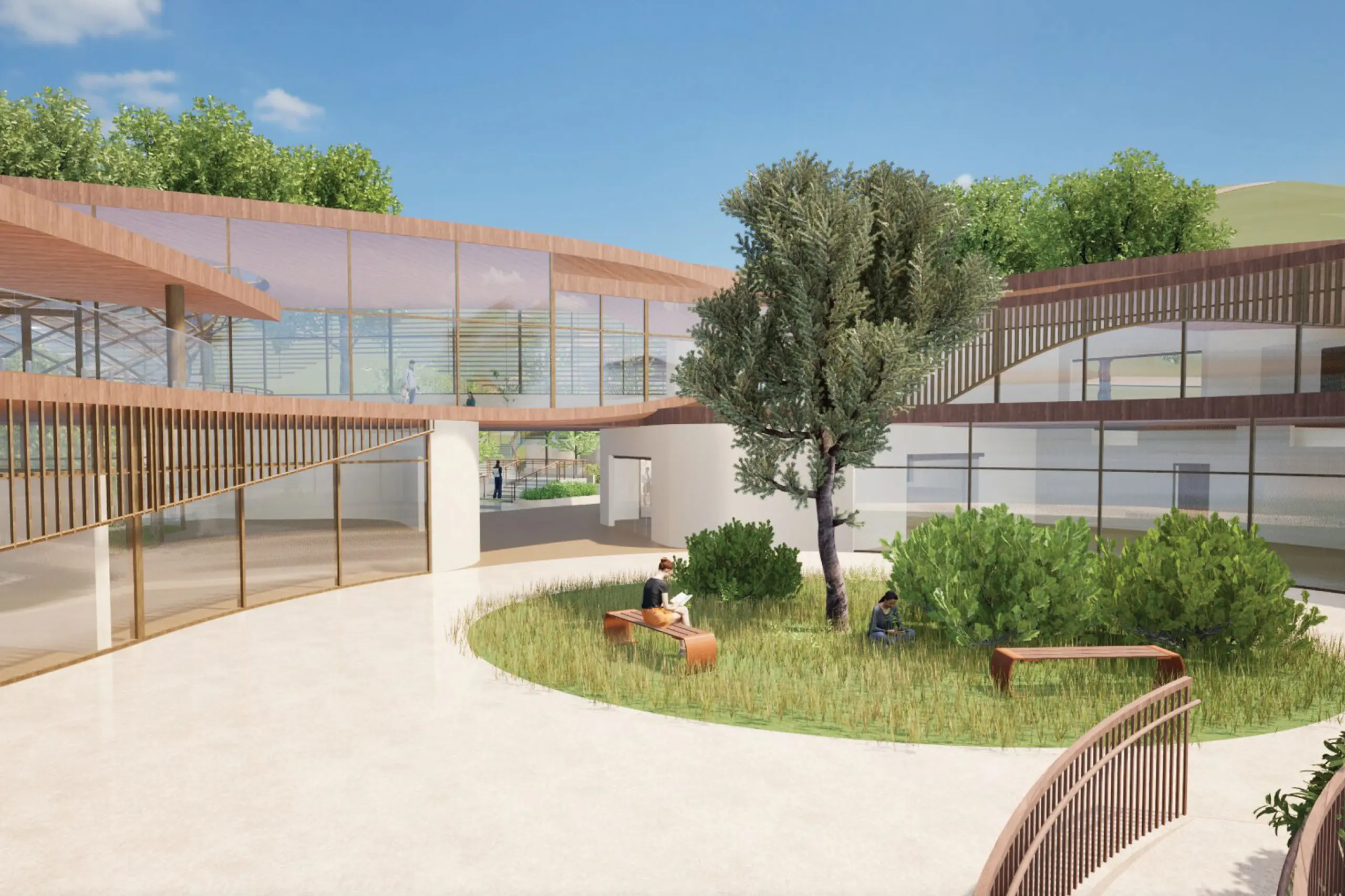
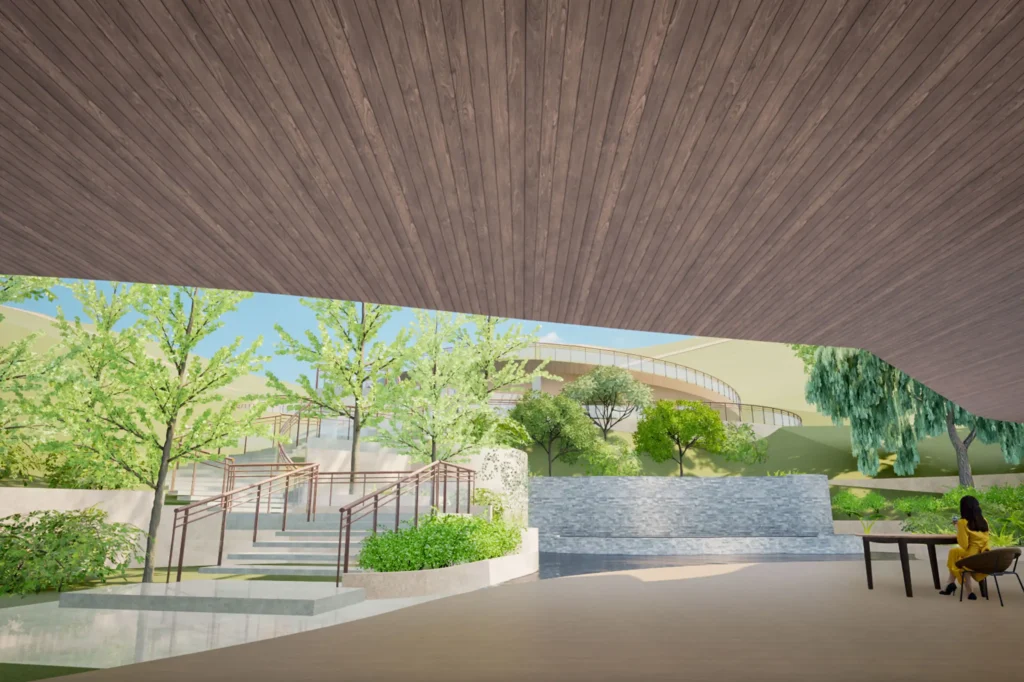
What we are currently looking at is the dining area that connects “Shape of the Wind” and the “Spiral.” It is a tranquil and natural space nestled between the second floor of the main building and the hill, providing an opportunity to enjoy a peaceful time in the midst of nature.

Passing through the tunnel leading to the outdoor dining area on the ground floor of the main building seen in the first photo, and ascending the naturally surrounded staircase, you will arrive at the “Spiral,” serving as an observation deck, rest area, and exhibition space. This area marks the starting point of the hiking trail atop the hill, offering excellent views, with Mt. Diablo visible from the observation deck.

If You Climb the Stairs, You will Reach the "Spiral", Which Serves as an Observation Deck, Rest Area, and Exhibition Space

A Little Explanation of Shape of the Wind - Spiral

Site

Designed by: Raku Yamazaki

Hello. I’m Raku, a college student pursuing architecture. My vision is to make the world greener, and more peaceful through sustainable design. I’m dedicated to weaving nature, functionality, and aesthetic appeal into every project. Let’s build a sustainable future together – one blueprint at a time. 

A Little Explanation of “Shape of the Wind” – Outside Dining Area Read More »

A Little Explanation of “Shape of the Wind” – Inside Garden

※This is a Description of a Part of My Architectural Project

Shape of the Wind - Front View

Shape of the Wind

You can see the whole project description here↑

Brief Description of this Area

“Shape of the Wind” is an architectural design for a non-profit organization focused on the education and practice of natural therapy. 

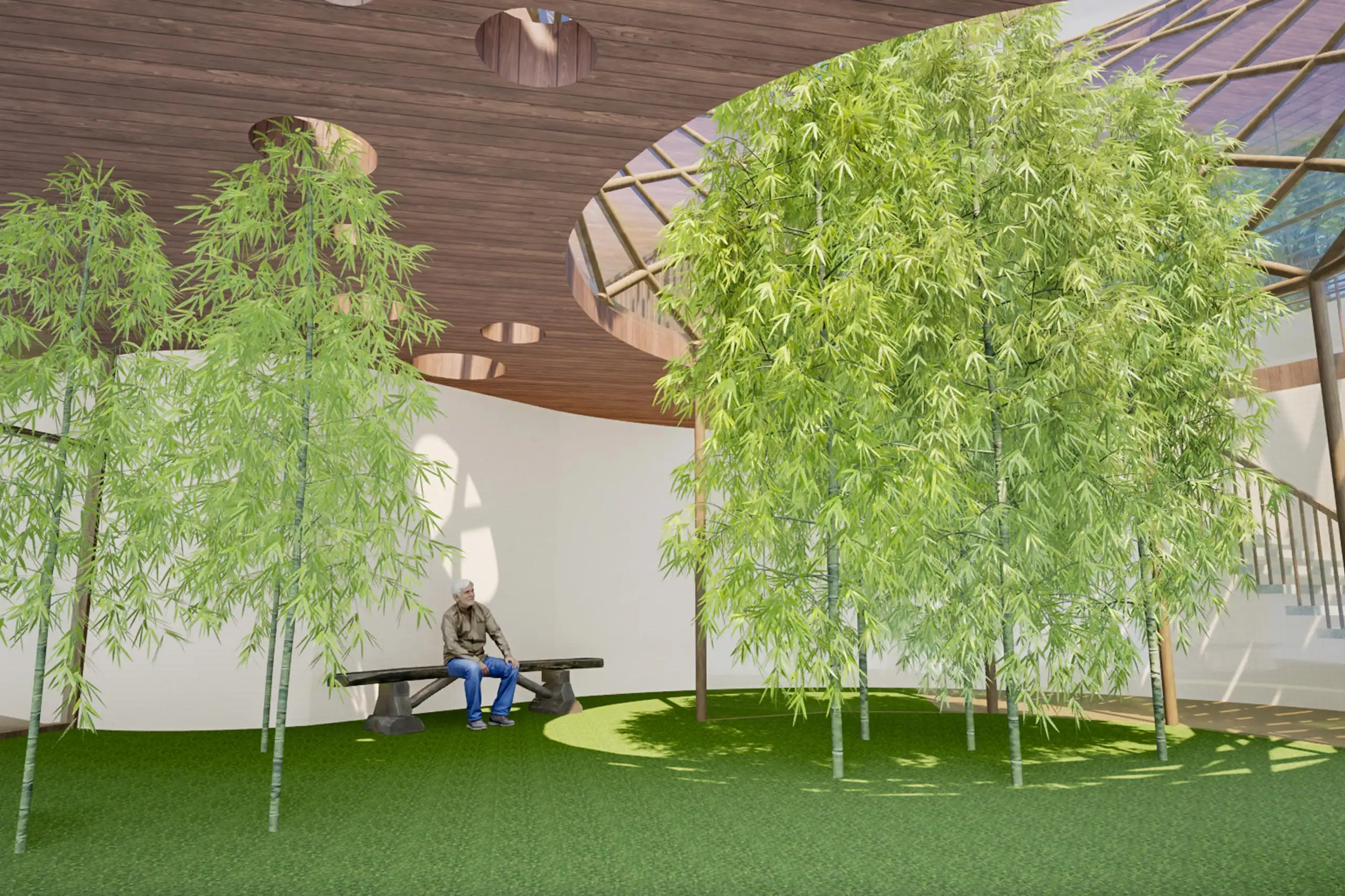
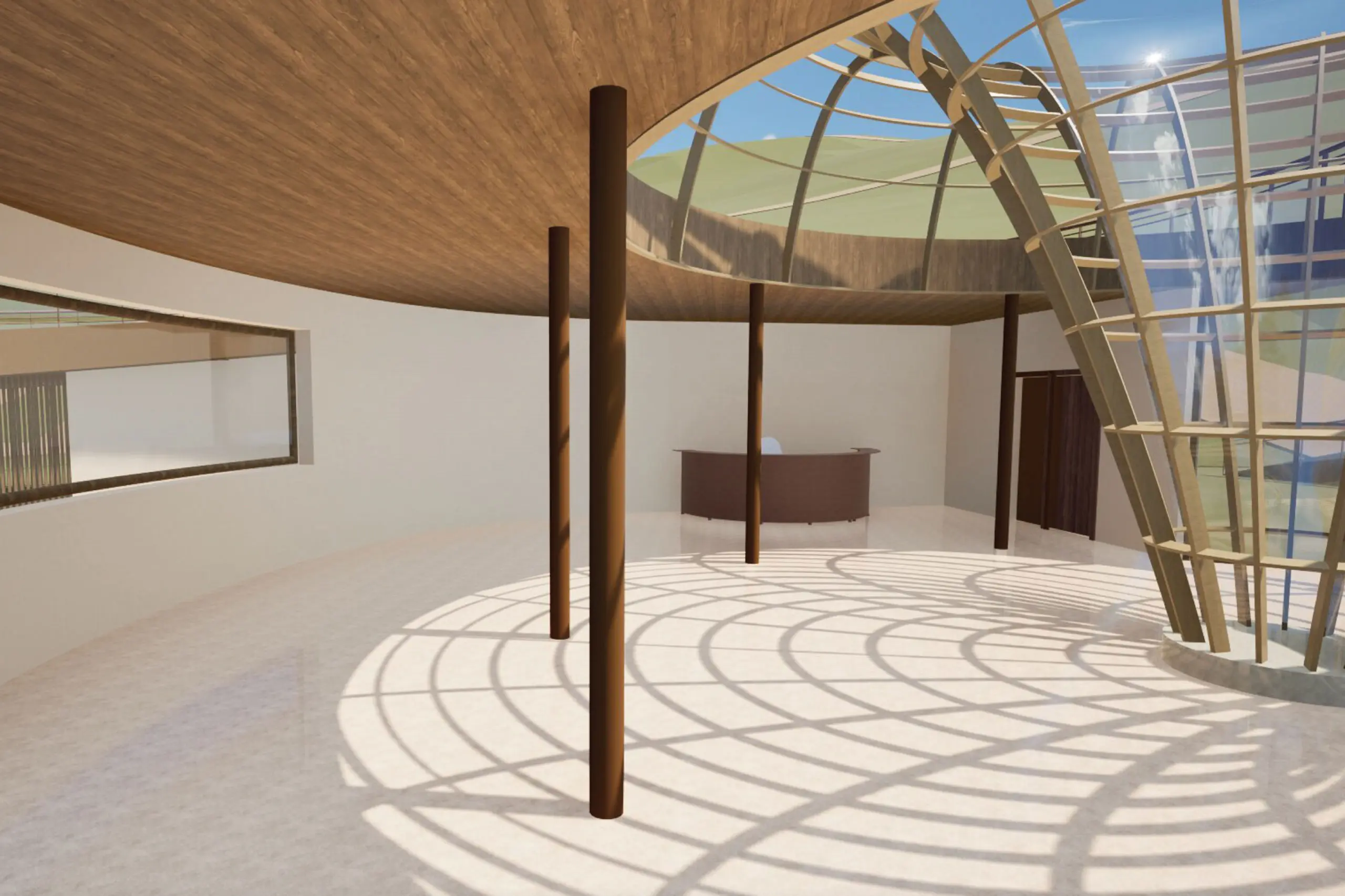
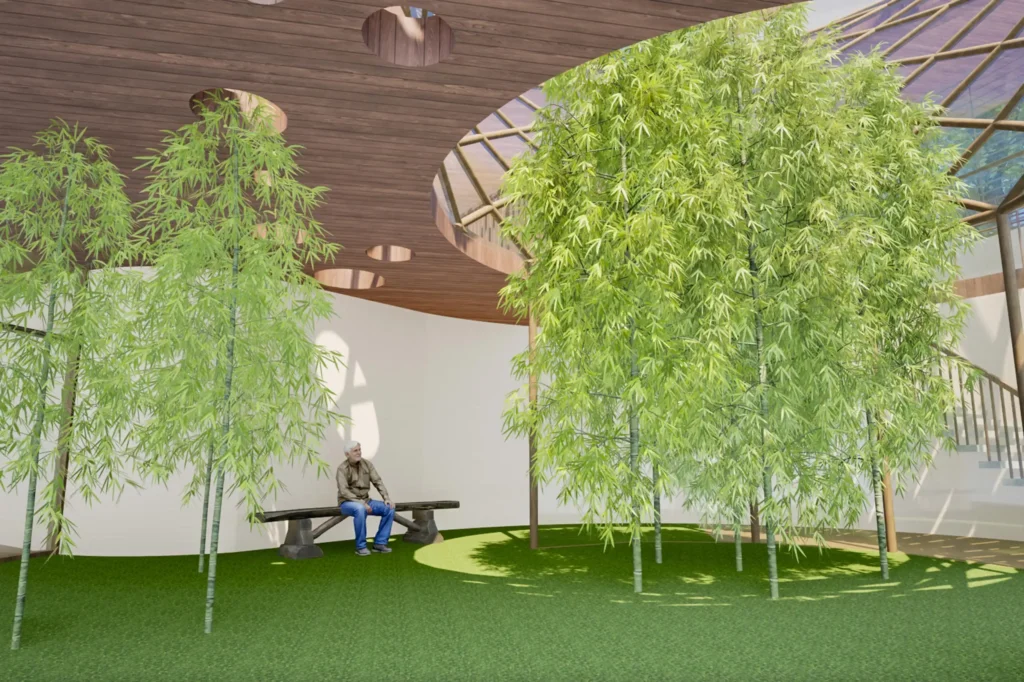
I decided to incorporate an indoor garden into the design to allow for a connection with nature even within the building. Large skylights are designed to integrate with the outside, bringing pleasant sunlight and a gentle breeze into the interior space.

Rain Water Harvest

This indoor garden is a crucial element in sustainability within this project. It is designed to collect rainwater and share its greywater (reusable domestic wastewater) with the toilets inside the building and an external pond. As a result, the entire site can escape the heat and dryness of summer, ensuring the preservation of greenery.

Site

Designed by: Raku Yamazaki

Hello. I’m Raku, a college student pursuing architecture. My vision is to make the world greener, and more peaceful through sustainable design. I’m dedicated to weaving nature, functionality, and aesthetic appeal into every project. Let’s build a sustainable future together – one blueprint at a time. 

A Little Explanation of “Shape of the Wind” – Inside Garden Read More »

A Little Explanation of Shape of the Wind – Spiral

※This is a Description of a Part of My Architectural Project

Shape of the Wind - Front View

Shape of the Wind

You can see the whole project description here↑

Brief Description of this Area

“Shape of the Wind” is an architectural design for a non-profit organization focused on the education and practice of natural therapy. The main building, Shape of the Wind, is situated just below a prominent hill, while on top of the hill stands the “Spiral,” functioning as an observation deck, rest area, and exhibition space.

This area marks the starting point of the hiking trail atop the hill, offering excellent views, with Mt. Diablo visible from the observation deck.

Site

Designed by: Raku Yamazaki

Hello. I’m Raku, a college student pursuing architecture. My vision is to make the world greener, and more peaceful through sustainable design. I’m dedicated to weaving nature, functionality, and aesthetic appeal into every project. Let’s build a sustainable future together – one blueprint at a time. 

A Little Explanation of Shape of the Wind – Spiral Read More »

Life of Kengo Kuma

From Yokohama to New York: Kuma's Architectural Voyage

Born August 8, 1956 in Yokahama, Japan, Kengo Kuma attended the University of Tokyo and graduated in 1979 which a bachelors. He worked at Nihon Sekkei and TODA Corporation. “After completing his degree in Tokyo, he traveled through the Sahara to study indigenous architecture and how villages deal with environmental challenges, before moving to New York as a visiting scholar at Columbia University” (Japan Travel) from 1985-1986.

A design firm with a “think ++” philosophy, where a shared creativity between clients and society reveals the notion of a creation of values to the future. The mission behind the philosophy of creation is “Cherish the individual, Respect Nature and Innovate the future.” Every idea behind Nihon Sekkei remains the same, to not selfishly want to create something but rather incorporate the minds of people, honoring individuality, and the beauty of nature to collectively create something wonderful, which will not fade over time.

“Together with society, we create environment where people thrive and live freely with respect for nature.”
- President,CEO, Jun Shinozaki

A construction, engineering, and real estate service providor. “It offers research, planning, design, management, and execution of projects related to local development, urban development, architecture, civil engineering, comprehensive engineering and consulting… Toda carries out the construction of hospitals, condominiums, railways, roads, water supply and sewer systems, medical facilities and schools. It also provides various technologies including structural, environmental, shield tunneling, mountain tunneling and renovation. The company has an operational presence in the US, Indonesia, Sri Lanka, Myanmar, West Africa, Vietnam, and Thailand. Toda is headquartered in Tokyo, Japan.” (GlobalData)

Bridging Tradition and Modernity in Architecture

In 1987 Kuma began the “spatial Design Studio” and launched his own office “Kengo Kuma & Associates” in 1990. Kuma’s focus is natural materials, sustainability, and a deep connection with Japanese traditions. He continues to grow in popularity as a contemporary architect and holds a concept if reviving and revitalizing traditional Japanese customs and values by integrating them into modern designs. Many of his buildings are wood based, all of which he sources locally. In Japan, Japanese Timber wood is primarily used as it has been a key element in Japanese design for thousands of years, natural, breathable and flexible, the perfect material for a sustainable design. He has sourced his materials from all 47 prefectures in Japan, even for just one project, the new National Stadium in Tokyo.

Kengo Kuma's Design Philosophy: Beauty with Purpose

It is worth noting that Kengo Kuma has a beautiful mind and intention in all his designs. There is meaning and purpose givin to the buildings, in there structure and interaction with the landscape. In one interview he recalls his inspiration in renovating The Capitol Hotel Tokyu.

"In Japanese, this is called shakkei, which means to borrow scenery," Kuma explains. "I wanted to borrow the beauty of the forest so that hotel guests can feel connected to the energy of the shrine. It is one of the unique things about Tokyo - that even in the center of the city, we have these peaceful sanctuaries."
- 隈研吾

Conclusion

I highly recommend visiting this website : https://timelesstokyo.com/experttips/kengokuma.html

to see what Kuma has to say about some of his architecture. There is so much to be said about Kengo Kuma and his profound impact on modern architecture as well as his inspiring way of bringing back traditional Japanese design. He is someone to learn from and admire. I will be writing in more detail of some of his great architecture such as, Great (Bamboo) Wall House, Beijing (2002) and Portland Japanese Garden’s new Cultural Village. I hope you take a moment to appreciate the works of the great architect Kengo Kuma and those who work with him who are creating buildings with meaning and beauty for a better future for us and nature.
Works Cited

“Toda Corp Company Profile – Overview.” GlobalData, www.globaldata.com/company-profile/toda-corporation/#:~:text=Toda%20Corp%20(Toda)%20is%20a,engineering%2C%20comprehensive%20engineering%20and%20consulting.

“Kengo Kuma and Japan’s New Architecture [PR] | Story | Travel Japan – Japan National Tourism Organization (Official Site).” Travel Japan, www.japan.travel/en/story/kengo-kuma-and-japans-new-architecture.

日本設計について | 株式会社 日本設計. www.nihonsekkei.co.jp/we/#we-message.

“Kengo Kuma Architect | Biography, Buildings, Projects and Facts.” Famous Architects, 16 Dec. 2015, www.famous-architects.org/kengo-kuma.

Life of Kengo Kuma Read More »

Why is Costa Rica Considered As the Happiest Country?

Introduction: Costa Rica's Dominance in the Global Happiness Index (HPI)

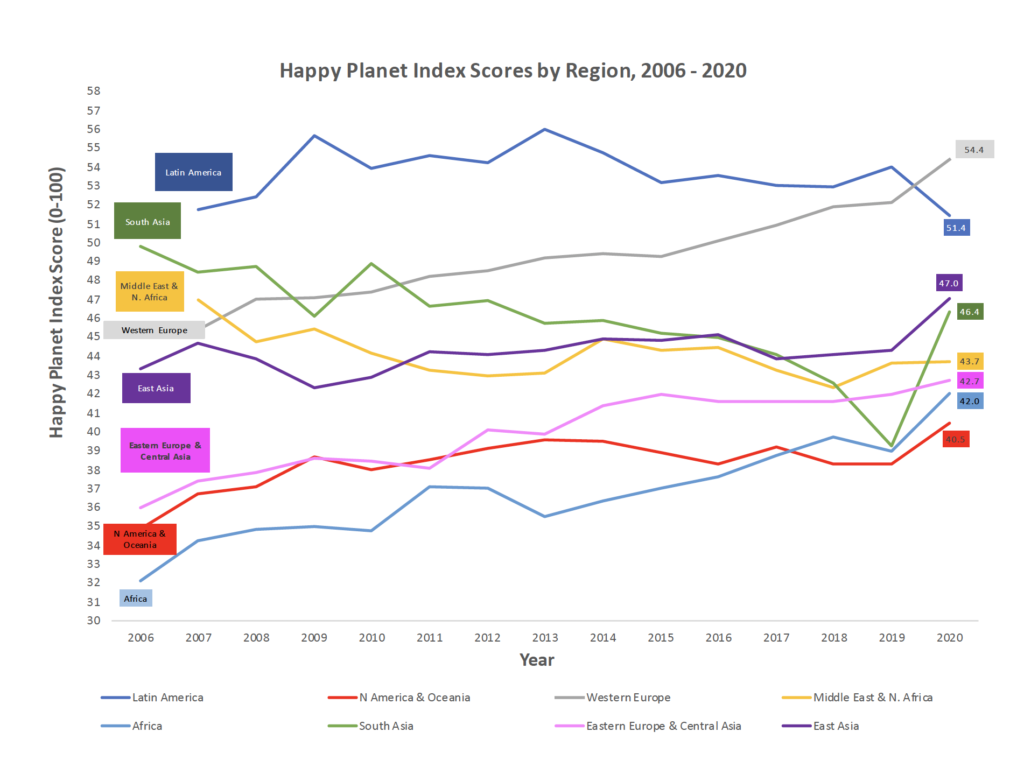
Costa Rica is consistently praised for its high rankings in the Happy Planet Index (HPI), a measure designed to assess a nation’s overall happiness and well-being. This index takes into account various factors such as environmental sustainability and quality of life, offering a comprehensive evaluation of a country’s happiness and health.

how-happy-is-the-planet

From GDP to HPI: Unveiling the True Measure of Human Flourishing

Why does Costa Rica receive top ratings as a happy country? In this exploration, we delve into the reasons behind Costa Rica being regarded as a nation of happiness.

Costa Rica's Abundant Natural Environment and Conservation Policies

Costa Rica is renowned as a treasure trove of nature, with its rich ecosystems and stunning landscapes covering the country. This beautiful natural environment not only serves as a place for relaxation and rejuvenation for its citizens but also acts as a crucial resource supporting the tourism industry.

Approximately 25% of the country’s land is designated as protected natural areas, reflecting Costa Rica’s commitment to environmental conservation. The government of Costa Rica actively promotes conservation policies, including transitioning to renewable energy, forest preservation, and biodiversity conservation. These environmental efforts may contribute to the happiness of the citizens by ensuring the preservation of their natural surroundings.

Promotion of Social Inclusion and Equity in Costa Rica

Costa Rica prioritizes policies that emphasize social inclusion and equity. Access to essential social services such as education and healthcare is widely available, leading to an improvement in the standard of living for its citizens. 

Furthermore, proactive support measures are implemented for the impoverished and local communities, contributing to a reduction in social disparities. Policies that prioritize social justice, including political stability and gender equality, are enhancing the happiness and well-being of the population.

Building a Sustainable Economic Model

Costa Rica has established a sustainable economic model where tourism and ecotourism serve as the primary economic activities, generating economic benefits while preserving the natural environment.

Additionally, traditional industries such as agriculture and fishing have developed in a sustainable manner with a focus on environmental conservation. This economic model allows for the coexistence of national prosperity and environmental protection, thereby enhancing the happiness of the citizens.

Conclusion: Reasons Why Costa Rica is a Happy Country

The happiness of Costa Rica stems from the combination of three key factors: its natural environment and conservation policies, social inclusion and equity, and the establishment of a sustainable economic model. 

Through a balanced approach in policies and initiatives, Costa Rica has enhanced the quality of life for its citizens and built a happy society. As a result, it has received high praise in the Happy Planet Index.

Why is Costa Rica Considered As the Happiest Country? Read More »

From GDP to HPI: Unveiling the True Measure of Human Flourishing

How to Measure "Well-being"?

Everyone wants a happy and beautiful future. But what kind of society, environment, or place is that? Having lots of money? Convenience through technological development? Freedom to do whatever you want?

The “Happy Future” that everyone desires is actually a very vague image.

What if there was an index to measure “well-being”? What if we could create a clearer and better society based on those indicators? This time, we would like to talk about such an epoch-making new indicator.

Introduction to the Happy Planet Index (HPI)

The Happy Planet Index (HPI) is a revolutionary metric that transcends traditional economic indicators to assess a country’s overall well-being and sustainability. While Gross Domestic Product (GDP) has long been used as a measure of progress, it fails to account for crucial aspects such as happiness and environmental impact. The HPI addresses this gap by combining three essential components: happiness, life expectancy, and ecological footprint.

Components of the Happy Planet Index

  1. Life Satisfaction (Happiness): The HPI incorporates subjective well-being through the measurement of life satisfaction. Surveys and data on individual happiness levels are gathered to understand how people perceive their quality of life within a country.
  2. Life Expectancy: Life expectancy is a key indicator of overall health and well-being within society. It reflects access to healthcare, nutrition, and living conditions, all of which significantly impact a country’s HPI score.
  3. Ecological Footprint: The ecological footprint represents the environmental impact of a country’s resource consumption. It measures the amount of biologically productive land and sea area required to sustain the lifestyle of its population, including food, energy, and other resources.

Calculating the Happy Planet Index

To calculate the HPI, each component is normalized and then combined to create a composite index. Normalization ensures that the different factors are on a consistent scale, making it possible to compare countries and assess progress over time.

For life satisfaction, survey responses are converted into a scale ranging from 0 to 10. Life expectancy is normalized by comparing each country’s life expectancy to a target value (e.g., the global average). The ecological footprint is assessed by dividing the country’s ecological capacity by its population size.

The normalized values for happiness, life expectancy, and ecological footprint are then averaged to calculate the Happy Planet Index score, which typically ranges from 0 to 100.

Do Your Own Personal HPI Test!

There is a personal Happy Planet Index test to help you reflect on how you can create your own “good life that doesn’t cost the earth”. It only takes 5 minutes to complete the test. 

The Happy Planet Index Rankings (2019)

The HPI rankings showcase the countries that have managed to strike a remarkable balance between human well-being and ecological sustainability. Nations with high HPI scores demonstrate that they are effectively meeting the needs of their citizens while minimizing their ecological impact.

Top 10 countries

  1. Costa Rica
  2. Vanuatu 
  3. Colombia 
  4. Switzerland 
  5. Ecuador 
  6. Panama 
  7. Jamaica 
  8. Guatemala 
  9. Honduras
  10. Uruguay

Selected Other Countries:

11.  New Zealand

14.  United Kingdom

29.  Germany

31.  France

35.  Ireland

41.  Sweden

57.  Japan

94.  China

105.  Canada

122.  USA

Countries like Costa Rica and Switzerland have consistently ranked high on the HPI, showcasing their commitment to sustainable development and societal well-being. These rankings serve as benchmarks for others to learn from and strive towards achieving similar outcomes.

Case Studies: Countries with Remarkable HPI Success Stories

Costa Rica: A Beacon of Sustainability and Happiness

Costa Rica’s top Happy Planet Index (HPI) ranking is due to its sustainable policies, investments in education and healthcare, and conservation efforts. The country prioritizes renewable energy, protects its biodiversity through national parks, and promotes sustainable tourism. Investments in education and healthcare contribute to citizens’ well-being. Conservation efforts, including payment for ecosystem services, incentivize environmental protection. Costa Rica serves as a global model for sustainable development, balancing economic growth with environmental preservation.

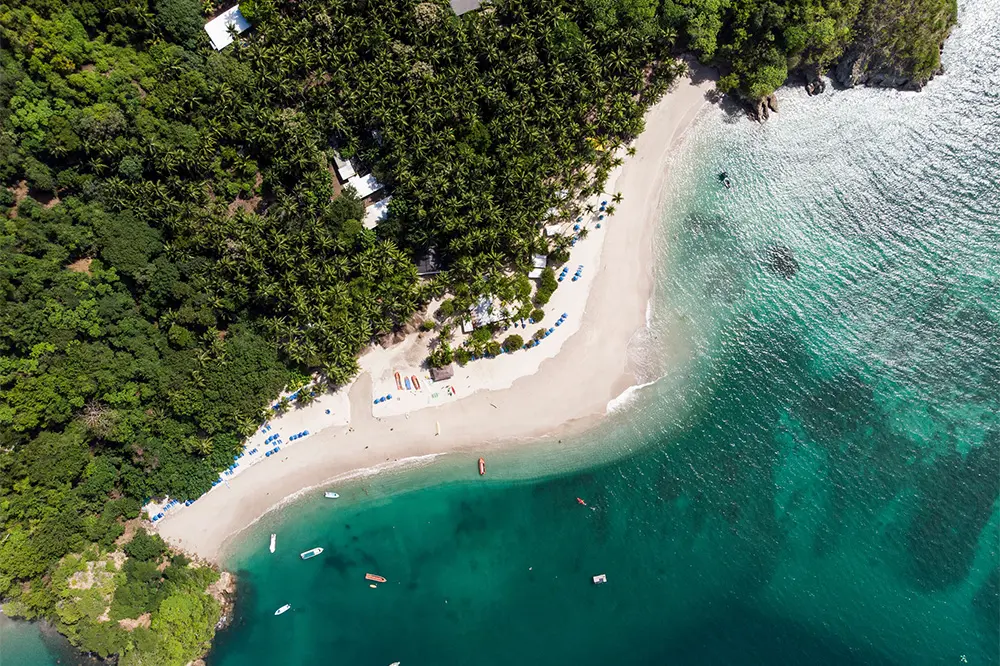
costa-rica-ocean

Why is Costa Rica Considered As the Happiest Country?

Bhutan: Pioneering Gross National Happiness (GNH)

Bhutan’s high HPI ranking is due to its focus on Gross National Happiness, sustainable policies, and environmental conservation. The country prioritizes citizens’ well-being, maintains carbon neutrality, and promotes equitable development. Bhutan serves as a global model for sustainable and holistic progress.

Criticisms and Controversies Surrounding the HPI

While the HPI is a pioneering metric, it is not without criticism. Some of the common criticisms include:

  1. Cultural Bias: The subjective nature of happiness surveys can lead to cultural biases in the data, potentially affecting the accuracy of HPI rankings.
  2. Simplification: The HPI combines complex factors into a single index, which may oversimplify the complexities of societal well-being and sustainability.
  3. Data Limitations: Data availability varies across countries, and some nations may have limited or outdated data, impacting their HPI scores.

Despite these criticisms, the HPI continues to evolve, and efforts are being made to address these concerns and refine the index.

Advantages and Benefits of the HPI

The Happy Planet Index offers several advantages and benefits for policymakers, researchers, and citizens:

  1. Holistic Measurement: The HPI provides a more comprehensive assessment of a country’s progress by considering social, environmental, and economic aspects together.
  2. Policy Guidance: HPI rankings can guide governments in shaping policies that prioritize well-being and sustainability.
  3. Public Awareness: The HPI raises public awareness about the importance of sustainable living and its connection to personal well-being.

HPI and Global Progress: Shaping a Brighter Future

The HPI calls for a paradigm shift in how we perceive progress and development. By emphasizing sustainable well-being over mere economic growth, the HPI encourages global cooperation to achieve a happier and healthier planet for future generations. It highlights the interconnectedness of human well-being and environmental preservation, urging governments, organizations, and individuals to work together to create a brighter future.

Conclusion

In conclusion, the Happy Planet Index provides a new lens through which we can view progress, well-being, and sustainability. By incorporating happiness, life expectancy, and ecological footprint into a single metric, the HPI offers a more holistic and inclusive approach to understanding human development. Its rankings inspire countries to learn from successful models and take steps toward achieving sustainable well-being. The HPI stands as a powerful reminder that our pursuit of happiness should go hand in hand with our responsibility to protect and cherish our planet

From GDP to HPI: Unveiling the True Measure of Human Flourishing Read More »

Nature’s SOS: 5 Reasons We Must Act Now to Protect Our Planet

Introduction

Our planet is at a critical crossroads, and the call to protect nature has never been more urgent. The delicate web of life that sustains us is under threat, and it is up to us to take action.

Today, we will explore 5 compelling reasons why safeguarding nature is not just an option but an imperative for the survival of life on Earth.

To Protect Biodiversity and Ecosystem Services

“Simply put, destroying nature destroys ecosystems and has a profound impact on human diets and personal lives.”

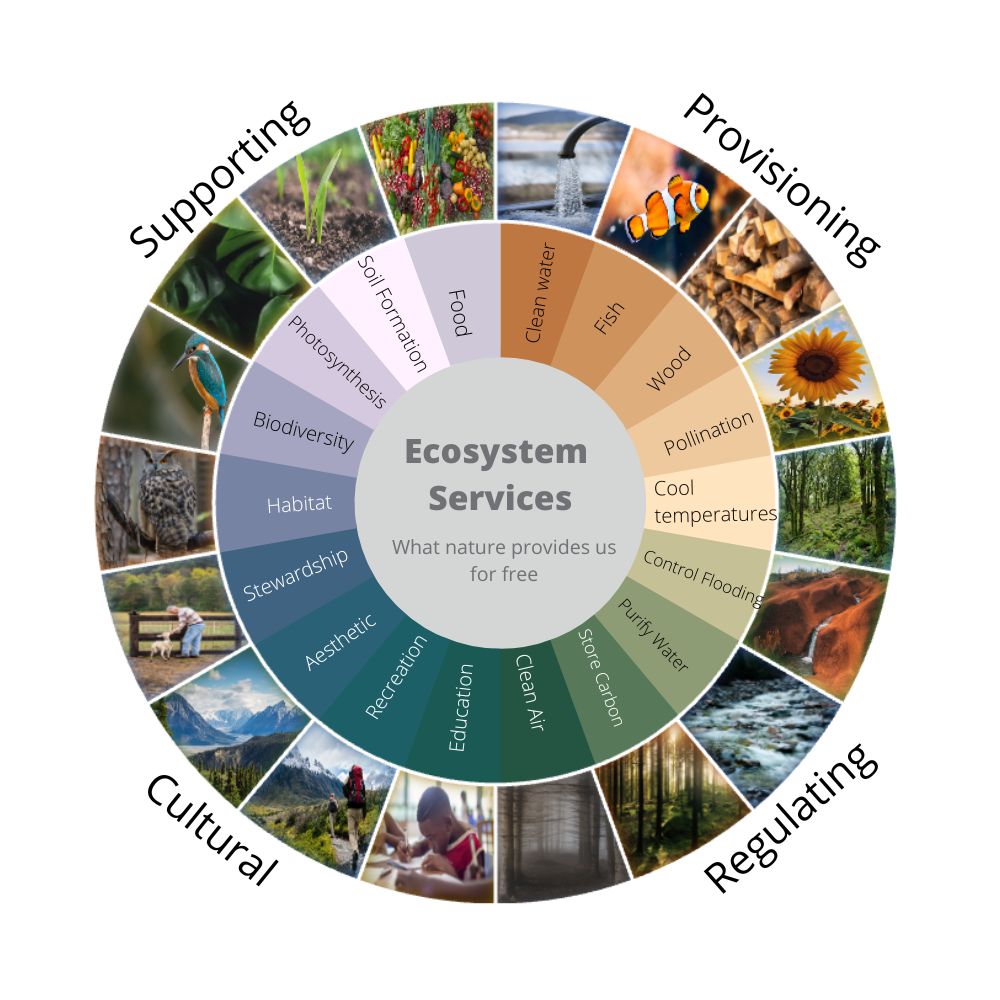
Nature’s amazing diversity is the foundation of all life on Earth. Each species, no matter how small, plays an important role in maintaining a balanced ecosystem. Biodiversity provides many ecosystem services that benefit both wildlife and human communities. From pollinating crops to purifying air and water, these services are the invisible threads that keep our world running smoothly.

Image cited from here

However, as mentioned earlier, our actions such as deforestation, habitat destruction, and overexploitation of resources have resulted in a staggering loss of biodiversity. To maintain the delicate balance of ecosystems, it is essential to protect natural habitats and conserve endangered species. In doing so, we can ensure the continued use of vital resources and the well-being of all living creatures.

For Human Health and Well-being

“Nature improves our well-being; living without nature causes stress and depression.”

Nature has amazing powers to heal and rejuvenate us. Studies have shown that spending time in green spaces and natural environments can reduce stress, anxiety, and depression. Spending time in nature improves our physical health and overall well-being. Whether it is a walk in the park or a hike in the mountains, connecting with nature is essential to a healthier and happier life.

As our world becomes increasingly urbanized, green spaces and nature are being lost, threatening our physical and mental health. By preserving and creating more green space in our cities and making nature a part of our lives, we can improve the well-being of current and future generations.

To Mitigate Climate Change

“A better future is in our hands.”

The battle against climate change can only be won with nature on our side. Forests act as powerful carbon sinks, absorbing carbon dioxide from the atmosphere and mitigating the effects of global warming. Wetlands also play an important role in carbon sequestration. By protecting natural habitats and adopting sustainable practices, we can make a significant difference in the fight against climate change.

However, deforestation, industrial emissions, and other human activities are causing increased greenhouse gas emissions, leading to unprecedented climate change challenges. Protecting forests, restoring degraded lands, and transitioning to renewable energy sources are essential steps to curb climate change and ensure a sustainable future for our planet.

To Get the Economic Benefits that Nature Conservation Brings

“Enjoy nature. And protect it.”

Nature is not only beautiful; it’s also the backbone of many economies. Industries such as agriculture, forestry, fisheries, and tourism heavily rely on healthy ecosystems and biodiversity. Failure to protect nature could lead to devastating economic losses and affect the livelihoods of millions.

On the other hand, embracing nature-based businesses and eco-tourism can create sustainable revenue streams while preserving the environment. Investing in conservation and sustainable practices can generate employment opportunities, foster innovation, and ensure the long-term prosperity of communities around the world.

Ethical and Intrinsic Value of Nature

“Let us not destroy the beautiful nature we have been given, but let us be the ones to preserve it for the future.”

Beyond its practical benefits, nature has an intrinsic value that goes beyond human needs. Every living organism has a right to exist and thrive, regardless of its direct usefulness to us. As caretakers of this planet, it is our ethical responsibility to protect nature and respect the intricate web of life that connects us all.

By safeguarding endangered species, preserving natural habitats, and valuing biodiversity, we demonstrate our commitment to the well-being of all living beings. Our actions today will shape the world for future generations, and it is our duty to leave behind a planet that is abundant, diverse, and thriving.

Conclusion

Nature’s SOS is loud and clear. The time to act is now. Preserving nature is not just about saving the planet; it’s about securing our own future. By protecting biodiversity, supporting ecosystem services, and valuing the intrinsic worth of nature, we can pave the way for a more sustainable and harmonious world. Each one of us holds the power to make a difference, and together, we can be the guardians that nature desperately needs. Let us rise to the challenge, take concrete actions, and create a legacy of environmental stewardship for generations to come. Our planet is counting on us; the time for action is now.

Nature’s SOS: 5 Reasons We Must Act Now to Protect Our Planet Read More »

Scroll to Top